

THE STRANGER'S GUNDOWN: A Gothic Gunslinger Lurking In The Spaghetti Sagebrush

The spaghetti western kept itself fresh throughout its history by crossbreeding itself with other genres to create hybrids that keep the genre and its elements fresh. For instance, Terence Hill and Bud Spencer built their careers on a string of films that mixed hefty doses of slapstick with sagebrush and Sergio Sollima used spaghetti western archetypes as his basis to create a uniquely politicized style of genre filmmaking.
That said, the best genre-bending occurred when horror, another classic strength for commercial-minded Italian film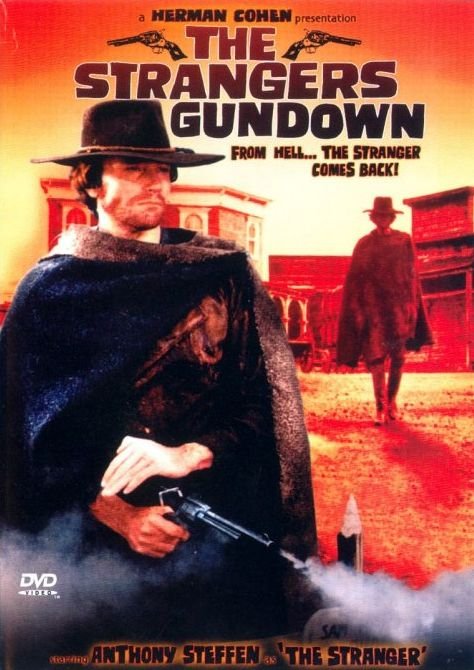 makers, was introduced into the spaghetti-sagebrush mix. That natural instinct that Italian directors have for gothic atmosphere would come to the fore and often result in films that were as spooky as they were exciting. The Stranger's Gundown, known in some territories as Django The Bastard, is one of the best examples of this horror/spaghetti western crossbreed and a film that mixes action and chills to bracing effect.
The film begins with its cryptic gunslinger protagonist, Django (Anthony Steffen), walking through a town and challenging a well-monied citizen to a gunfight by planting a wooden cross with the man's name on it in front of him. Django easily wins the gunfight despite being outmanned and this shakes up the town's wealthy men, all of whom seem bound together by a mutual fear of Django - and a nasty secret that none of them care to discuss.
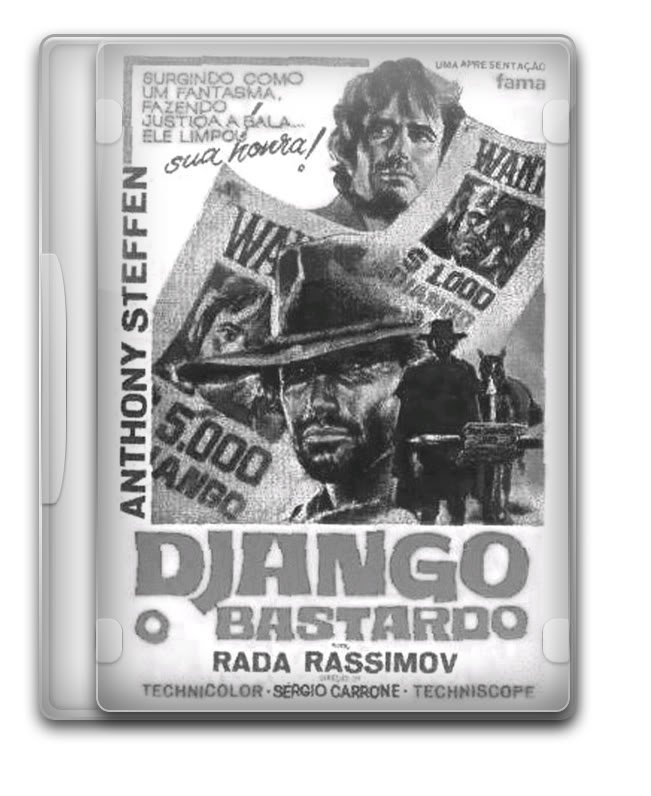 Django methodically goes about the business of avenging himself against the wealthy townies. However, his quest becomes complicated when he sets his sights on Rod Murdok (Paolo Goslino), the town's main benefactor and his number one target. Django is forced to deal with Rod's insane brother, Hugh (Luciano Rossi), who becomes obsessed with proving himself by tracking Django down. Further complication is added by Alida (Rada Rassimov), Hugh's money-crazy bride, who Hugh uses as bait to lure Django out into the open...
The above description of plot elements might have a standard-issue sound to them but the way they play out on screen is another matter entirely. Director Sergio Garrone tells the story in an unusually atmosphere-driven style that deploys all manner of eccentric camera angles and placements to create a ghostly atmosphere that nicely offsets the usual brutality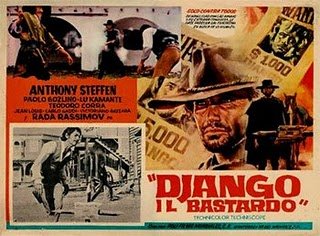 . It's also worth noting that the script also uses horror film settings like a graveyard and a church as unique backdrops for a few key setpieces. Also, gothic iconography is used to great effect, especially crosses and tombstones.
The film's otherworldly appeal is cemented by effective performances. Steffen, who also co-wrote the script, offers a quietly charismatic version of the "mysterious stranger" archetype and Rossi is a scene-stealer with his wide-eyed antics as the childlike yet extremely dangerous madman who threatens Django's vengeance. Elsewhere, Gozlino does a nicely understated version of the familiar soulless rich man characterization and Rassimov 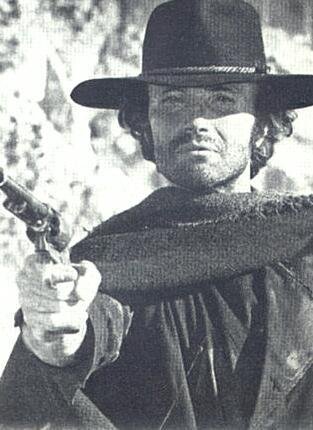 creates a likeably self-sufficient and sarcastic variation on the usual "woman caught in the middle" character.
One final note of interest: some fans and writers have referenced The Stranger's Gundown as a potential influence on High Plains Drifter. This is an interesting point to consider, as both films feature eccentric, often ghost-like avengers taking their revenge for a past incident that represents a bit of social commentary on the part of the filmmakers. In fairness to Clint Eastwood, High Plains Drifter is no mere retread, as it features its own thematic targets and its own differently developed plot, but there are enough similarities to make it an interesting double-feature partner for Garrone's film. In any event, The Stranger's Gundown is an effective gothic variant on the spaghetti western genre and a solid choice for Eurocult fans of either stripe.
Blu-Ray Notes: Update 8/13/19 - after years of grey-market boots derived from VHS masters, The Stranger's Gundown has finally gotten the high-def treatment courtesy of Synapse Films under its Italian title of Django The Bastard. The transfer is a new 2K remaster derived from the U.S. rights owner's negative element. The results look gorgeous, showing off a rich, earthy color scheme and all kinds of new details unimaginable in previous video versions. In terms of sound, it offers a lossless presentation of the original English mono dub with optional subtitles for the hard of hearing. The one extra is a commentary track by author and Italian film scholar Troy Howarth. It's a fact-dense track with extensive rundowns of cast and crew credits as well as thoughts on the hierarchy of spaghetti westerns. His opinionated approach may ruffle feathers - he's pretty rough on leading man Steffen - but there's plenty of quality info on this track for spaghetti western buffs. Click below for a direct ordering link at Synapse.
https://synapse-films.com/synapse-films/django-the-bastard-blu-ray/