

SUMMER SCHOOL (a.k.a. MAG WHEELS): Sun-Kissed Social Darwinism Amongst The 1970's California Teen Set

There's something special about the teensploitation films made in California during the mid-to-late 1970's. They had an eye for the teen culture of the era and, like the best exploitation flicks, they had the wherewithal to depict its phenomena at the places where they occurred. Whatever they might lack in technical or narrative slickness, they made up for in pure verisimilitude.A great example of the form is Summer School, known to many viewers by its original title of Mag Wheels. This eye-opening quickie was written and directed by Bethel Buckalew, a California-based exploitation filmmaker better known for his work in the softcore sex-flick field (he was a specialist in hillbilly-themed efforts like Sassy Sue and The Pigkeeper's Daughter). With Summer School, he turned his eye to the youth culture of his era - and what he put on celluloid offers pure b-movie entrancement.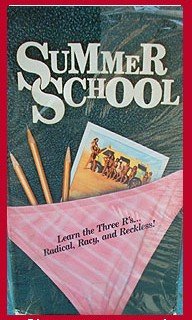 Anita (Shelly Horner) is a new student at a beachside community's high school. She's got a tough personal life, complete with a workaholic dad (Irwin Schaeffer) who's always hassling her about her lackluster school performance and a thankless arcade job with a boss (Jeff Richards) who sexually harasses her. She's swept off her feet when Steve (John Laughlin), the school's big-man-on-campus, takes an interest her. Unfortunately, this puts Anita in the crosshairs of Donna (Verkina Flower), Steve's intensely jealous and vindictive main squeeze. Anita finds support from a group of tough, independent girls led by Jill (Phoebe Schmidt) but it may not be enough to fend off the unpredictable twists and turns of Cali-teen life...If viewed purely as teensploitation fare, Summer School delivers the sun-kissed goods. Buckalew's script piles on every bit of exploitable content he can muster on his tiny budget: catfights, car-chases and heavy petting (sometimes unclothed) are the fuel that keepd the exploitation-flick engine running. The performances are all rough around the edges - but this actually enhances the film's vibe, with the tendency for melodrama and posturing of its cast unintentionally offering a pretty accurate psychological representation of how people act at this age. Best of all, the film uses real locations to atmospheric effect, giving it tremendous production value and a tangibly you-are-there Californian mood that a bigger-budgeted film wouldn't be able to capture.
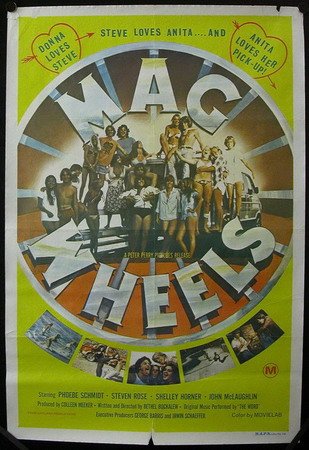 However, what is really fascinating about Summer School is how it captures the socially Darwinian nature of teen life with an eerily casual perfection. It portrays a social order amongst its teens that is set in stone, with Steve and Donna at the helm. Anita attempts to buck it by making a play for Steve and suffers at the hands of Donna as a result. She does her suffering in silence because she knows that's the price of her actions. Another character in the same boat is Pledge (Steven), a good-natured nerd who puts up with abuse and endless menial tasks from Steve's crowd in the hope he might one day enjoy it. No one dares come to his defense - he's chosen his role and must heed its consequences. Even Jill's band of femme-rebels, the film's most interesting and forward-thinking creations, aren't trying to overthrow the social order: they're just trying to carve out their own place within it. Adults are either useless or ignored in the scheme of things and are therefore ignored, even when they are predatory like Anita's boss. They're just old people, they might as well be dead.Whether intentional or not, this element of brutal honesty beneath the expected hijinx lends a frisson to Summer School that no one would expect. It's teensploitation with a difference and this duality makes it a standout for anyone interested in reliving this genre. Great Clip from Summer School (warning: NSFW language):