

SILENT RAGE: Chuck Norris Meets Frankenstein In A Slasher Flick

This review must begin with a confession: Chuck Norris has always been Your Humble Reviewer's least favorite action hero of the 1980's. Despite his formidable martial arts skills, he was a painfully wooden presence during that primetime era of action filmmaking. He also tended to choose dull vehicles for himself: for every gem like Code Of Silence, there's an equal-strength dud like Forced Vengeance in his filmography to balance it out. That said, there are a handful of schlock-action gems buried in his filmography. The best of these is Silent Rage, which is easily the most eccentric and creative flick Norris starred in during his heyday.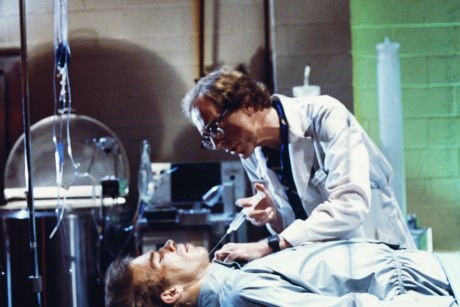 For starters, the story is unusually ambitious for a Norris programmer - the sci-fi/horror/action hybrid of a script starts off with a wacko named John Kirby (Brian Libby) taking an axe to a few housemates after a nervous breakdown. He tangles with Chuck a bit then gets shot down as he's trying to escape. His well-meaning doctor, Tom Halman (Ron Silver), tries to revive him - Kirby is a patient being studied by the high-tech lab he works for - but the damage to his brain is too great.
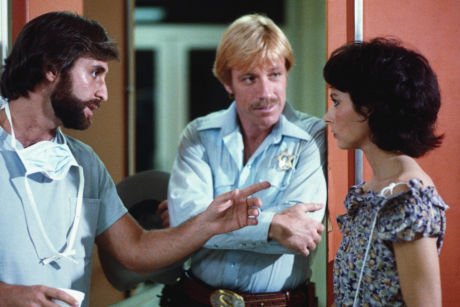 However, Tom's less scrupulous colleague Spires (Steven Keats) uses Kirby's body to test an experimental cell regeneration serum designed for super-fast healing. It works all too well, turning Kirby into a killer than instantly rebounds from gunshots and car-crashes. Kirby ultimately crosses paths with Chuck and the end is result is what Joe Bob Briggs would call "Kung Fu City."Silent Rage is every bit as silly as it sounds but it's much more skillfully made than you might think. The script thankfully has a sense of humor about itself - the evil doctor says stuff like "We're
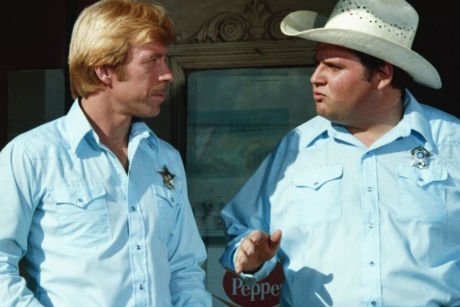
 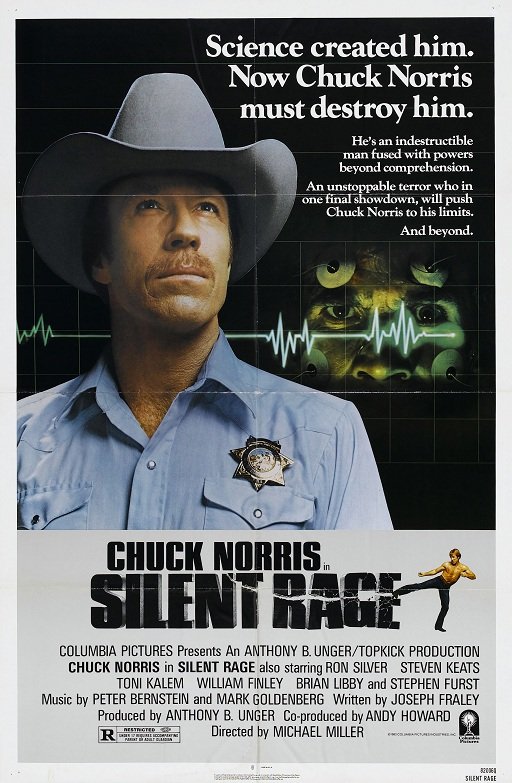 scientists, not moralists" and a gratuitous bar brawl pitting Norris against a gang of cartoonish bikers is worked in to allow Norris fans to get their kicks (it's a big highlight of the flick, as funny as it bone-breaking). The story's bizarre combination of elements adds to its appeal, giving it an off-kilter feel that really makes it stand out in the frequently humdrum Norris filmography.As for the acting, Norris is wooden as ever in the few dramatic moments but the story mostly allows him to play his role with a deadpan humor that works surprisingly well. The indestructability gimmick allows him to have a worthy foe for once in the fight scenes - and Libby's gaunt yet hulking presence makes him a perfect foil. Silver delivers a fun, off-the-cuff backup performance (he seems to be channeling mid-1970's Pacino here) and Keats chews scenery with élan as the bad guy scientist. Elsewhere, exploitation fans will be happy to see the supporting roles filled with familiar faces like William Finley and Stephen Furst.
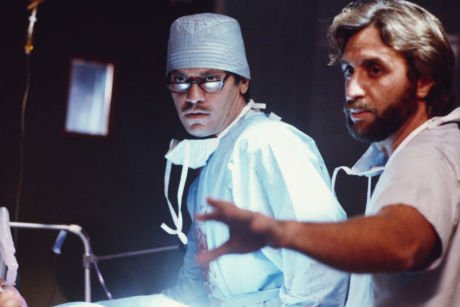 However, the best aspect of Silent Rage is the stylish direction by Michael Miller. For those who don't know the name, Miller was a b-movie vet who also directed the New World pictures fave Jackson County Jail before going on to a long career in t.v. movies. Here, Miller gives the story an impressive amount of style - the opening reel contains two impressive, painstakingly choreographed one-take shots done with a Steadicam. Despite a few pacing problems in the second half (mainly due to the script) he keeps the story rolling and deftly blends the horror and action elements. It's obvious
  he did his homework for the horror side of the story because his use of prowling camerawork and a minimalist synth score evokes the feel of John Carpenter's early work, particularly Halloween.In short, Silent Rage offers cheap thrills, but they are well-crafted cheap thrills delivered with a bizarro sense of flair. Even if you don't go for Chuck Norris flicks, this one's weird enough to be worth hunting down.