

THE SCARLET WORM: A Defiant New Wave In The Old West

If you were making a list of the least commercially viable genres in current cinema, the western would inevitably be either the top pick or very close. Younger viewers don't relate to them, older viewers can't be relied upon to seek them out and for the most part, studios don't want to touch them. In other words, you have to be exceptionally driven to pursue making a western in this day and age.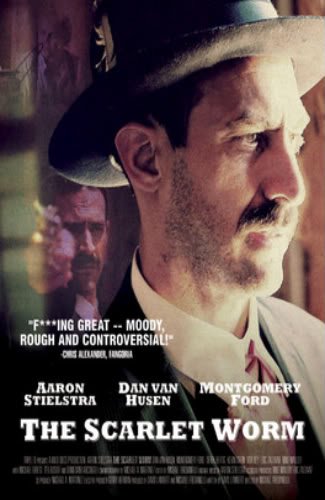 And driven is the perfect word to describe the aesthetic behind The Scarlet Worm. Not only is it a western made on a budget that wouldn't cover the craft services budget of a Hollywood film, it's a defiantly uncommercial western full of grim plot elements, gory violence and odd characters. It also happens to be a hell of a lot of fun if you like westerns, particularly those of the 1970's revisionist and spaghetti varieties.The Scarlet Worm starts with the spine of a premise that would have worked as a mid-to-late 1960's spaghetti western and amps it up with a modern attitude and some 1970's-style adult content. Print (Aaron Stielstra) works as a hired assassin for wealthy ranch owner Mr. Paul (Montgomery Ford, a.k.a. Brett Halsey). Paul made his fortune on stolen cattle so he's hated and plotted against by many but Print gets by with surprising ease thanks to superior gun-slinging skills and a unique view of life that is well s
 uited to his hostile surroundings.Things change when Mr. Paul gives Print his latest job: he is hired to kill Heinrich Kley (Dan Van Husen), an eccentric Dutchman who owns a local whorehouse and gives his prostitutes abortions whenever the clients accidentally impregnate them. To make things more complex, Paul simultaneously asks Print to train Lee (Derek Hertig), a callow young gunman who needs tutoring. Print tells his only real friend, a retired gunslinger-turned-barber named Hank (Kevin Giffin), that he wants out of the game... but he dutifully accepts the dual gigs.Print decides the assassination of Kley as a chance to "paint his masterpiece" and manipulates his way into a job as the security man at the whorehouse. As he studies his prey, he also trains Lee and incorporates him into the sch
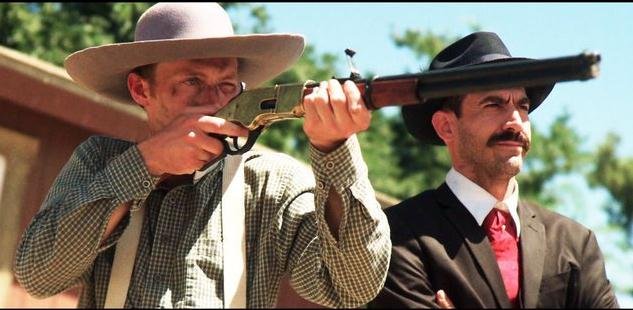 eme. Unfortunately, greed, duplicity and human emotions rear their ugly heads and make Print's elegant plan unwieldy - and lethal. Before the credits roll, the landscape of the town will be changed permanently and everyone will have blood on their hands.As the involved synopsis above should reveal, The Scarlet Worm has the kind of narrative complexity you don't normally associate with low budget filmmaking. David Lambert's script rises above the film's limited resources by investing depth and texture into the characters,
 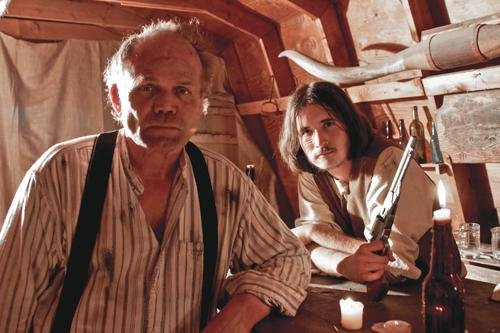 their relationships and the serpentine history they all share. He also invests much time in crafty dialogue, bringing a wordsmith's touch to the expected profane, macho insults but also weaving in exchanges that are shockingly philosophical. The latter is heard in Print's narration but the best example might be a conversation between Print and Kley where they discuss the Bible and the nature of man in relation to the whorehouse they're working in. This exchange also involves the creepy yet elegant explanation of the film's title.
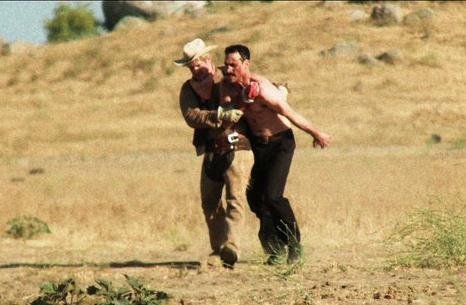 That said, fans of gritty westerns shouldn't fear that The Scarlet Worm is a talkfest. In fact, the flipside of the film's philosophical bent reveals hefty doses of Grand Guignol bloodletting and casual sleaze that evoke the extremes that the western genre found during the 1970's. Eye-opening highlight in this area include a grimly orchestrated abortion scene that introduces Kley to the audience, a surprising amount of casual nudity from the prostitutes and tons of splattery red squibs erupting from torsos, limbs and even heads during the frequent scenes of gunplay.This mix of the intellectual and the luridly visceral could have gone awry in any number of ways but The Scarlet Worm doesn't fall prey to those traps thanks to a high level of discipline. Director Michael Fredianelli wisely goes for a timeless sense of style: despite the HD video photography, it is old-fashioned in its use of camera movement and avoids hyper-speed ed
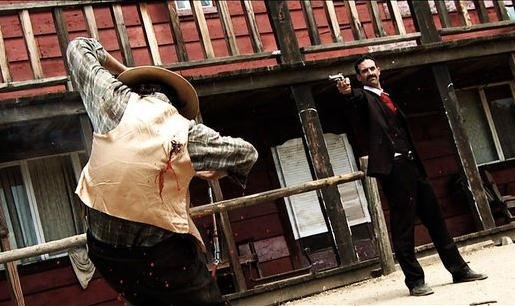 iting. He hits the right blend of unfussy style for the dramatic scenes and carefully choreographed kinetic flourishes for the action. This careful touch allows the viewer to get invested in the film's gothic vision of the Old West.This sense of discipline extends to the performances of the actors. Stielstra cuts an intense figure as our anti-hero, delivering his plentiful dialogue and narration with confidence that comes with being truly invested in the work. Giffin provides solid support and a nice laconic contrast to Stielstra's turn as his friend. However, the big scene stealers are a couple of actual spaghetti western veterans: Ford presents an oddly amiable portrait of amorality as the film's "evil boss" archetype while Van Husen is intensely creepy in a deadpan, controlled way as the whorehouse's overlord.
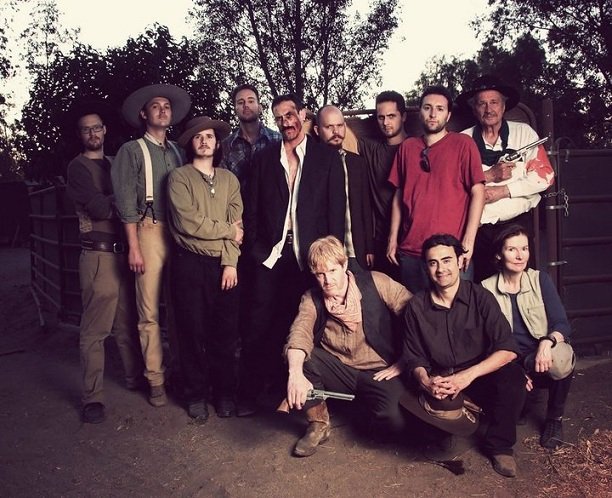 The film's budgetary limitations show up in spots - the use of computer-animated muzzle flashes for the guns, a few raw line readings from bit players - but Fredianelli and crew have pulled off a minor miracle here. This is a film for the true believer, aimed squarely at the sensibility of modern western fans who embrace the genre's experimental, non-traditional outer edges. This is because it was made by those fans - and the blood, sweat and tears invested in the project shine through in every frame. Its nervy sense of gusto deserves the attention of cult film fans, especially the western lovers.