

THE RED SHIRT CHRONICLES: PART 2 - Red Shirt Begins

The second installment of Schlockmania's interview series with Michael Felsher talks about his first experience producing a featurette, the factors that led him to form his own DVD supplement production company, Red Shirt Pictures, and discussions of some of the early Red Shirt Pictures projects. Night Of The Demons, Effects and the infamous Nail Gun Massacre are just a few of titles covered in this segment so dive in to find out more... The NIGHT OF THE DEMONS DVD saw you making your debut as a featurette auteur. Did Anchor Bay hire you to do this piece or did you set out to do it on your own? Could you tell us the story behind the featurette?  “Featurette Auteur”? That’s a cool term, I gotta start using that!Well that was a “take the bull by the horns” type situation. In late 2003, I began (on my own time) learning the ins and outs of Adobe Premiere, Final Cut Pro, etc. so I could re-master some of my old short films, and I ended up actually finishing the project that went bust on me back in ’92. I finished it just so I could say it was done, you know? After that was over, I felt like I had finally taken that albatross from around my neck and I was eager to try something new.I had seen what guys like David Gregory and Perry Martin had been doing with Anchor Bay and I wanted to give it a shot, but since Anchor Bay didn’t necessarily need anyone else at that point on the production side of things, I knew it wouldn’t be easy to open that door.One of the many acquisitions I helped research was NIGHT OF THE DEMONS, which was going to come out in August of 2004, and while they had plans for a commentary, that was gonna be about it. As it turns out, star Linnea Quiqley was going to be appearing at a convention a couple hours from Detroit in April of that year and I figured I would try and see if I could interview her for a featurette on her work in the movie. I would then edit it myse
 lf and present it as a finished piece to Anchor Bay to see if they would use it and then possibly use for me, down the road, for future projects. At that point I figured I didn’t have anything to lose by trying. The worst case scenario was that the featurette would suck rocks, would most likely be rejected, and I would go back to my normal duties at AB.Anyway, after a series of potential derailments including screwed up airline information, a stolen camera, and a total lack of prep time, I got Linnea’s interview completed literally five minutes before she had to leave for her flight back home from the convention. My good friends Mike Watt and Amy Lynn Best set up and shot the interview with me and I came back to Detroit with what I felt was a potentially great featurette, and one week later I presented a fully edited piece to Anchor Bay called MY DEMON NIGHTS WITH LINNEA QUIGLEY. They liked it, paid me for it, and put it on the disc.It was a real special event for me in a number of ways. That was the beginning of my “featurette auteur” career When you left Anchor Bay , what inspired you to start your own company? Did the work come to you, did you chase it or was it a bit of both?
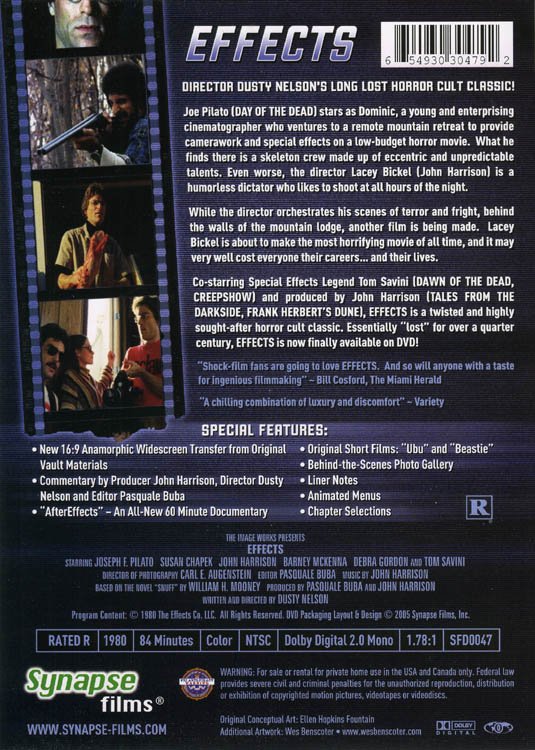
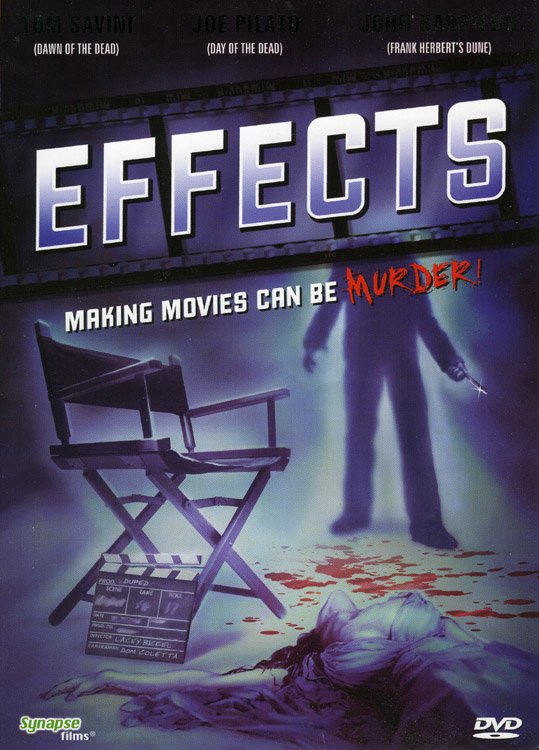 My hopes with creating the MY DEMON NIGHTS featurette is that would eventually lead to a position on the production side of things at Anchor Bay. To be fair, I was told then that there was not a clear advancement path into that arena even with a completed featurette to my name, but I felt I had to hold out hope. My position at Anchor Bay was something of a double-edged sword in that while I got to participate in a variety of ways on the various DVDs there, I didn’t have an easily classifiable place in the company. This was no one’s fault really, it was just the way things worked out.When EFFECTS got placed over at Synapse, I had been having discussions with John Harrison about a documentary that would encompass both the making of the film and the time and place in which it was made in Pittsburgh. After a while I found out John had shot interviews in LA and Pittsburgh, and I had assumed that he was going to be completing the whole thing himself…which I certainly
  understood. He hadn’t seen any of my earlier work and no reason to trust me with such an ambitious project, and yet three weeks later I received a box of tapes containing all the unedited interviews with a note from John saying “Hey Michael, can’t wait to see what you come up with.” Needless to say I was both scared and thrilled about working on this, but with my full-time job at Anchor Bay it was gonna be hard to devote the necessary time to putting it together.As a result of my goals to become a producer/director, and the aforementioned fact that my place at Anchor Bay had kinda stagnated, I left in April 2005 to devote my energies full time to AFTEREFFECTS as well offering my services up to other companies. The funny thing was that my bosses at Anchor Bay sensed my general displeasure in the last few months there, and in our
  last meeting before I left, they all felt that doing my own thing was the next best step for my career. It was probably the most amicable parting in the history of the video business. I still consulted with them for a while, and I always drop by the office to visit every now and then. I wish I had more juicy stories to tell about my departure, but it was as pleasant as could be.I just want to take a second and say that I don’t regret one moment of my nearly five years with Anchor Bay and it was a life-changing experience in so many ways. I feel proud to have been part of a company that put out so many great DVD titles of so many classic titles, both known and unknown. I still miss the atmosphere and the people over there a great deal.Starting up my own company was the next logical step since I had a lot of industry contacts due to my time at AB and I really felt like I wanted to be my own boss for a change. Of course that means you have to blame yourself when things go wrong, and stealing your own office supplies isn’t nearly as much fun or financially advantageous.
 That first year was tough…very tough. I had EFFECTS to work on, and thanks to my dear friend Don May, Jr. at Synapse Films, he gave me whatever work he could send my way over the course of that year but I was very nervous about finding gigs. The truth is you have to hustle to get work at all times. You can never assume that you will get that proverbial call out of the blue offering you a big job. Now that does happen sometimes on occasion but not nearly enough to make a living on.I would have to say that 90% of the work I’ve gotten and continue to get are all jobs that I pitched to various companies over the last couple of years. They weren’t existing projects that were taking bids from various suitors. Sometimes you just have to do the research, make a proposal and hope that someone thinks it’s worth spending the money on.By the way, what inspired the “Red Shirt Pictures” name?Well I’d created a name for my production company in high school…which was NearDark Entertainment (which was a tribute to my favorite neglected horror film, which I later worked on at Anchor Bay…go figure). Of course that “company” consisted of me and a few pieces of notebook paper. Anyway, when I did MY DEMON NIGHTS I wanted to create a company name for myself and I felt NearDark was the past and I needed something new.
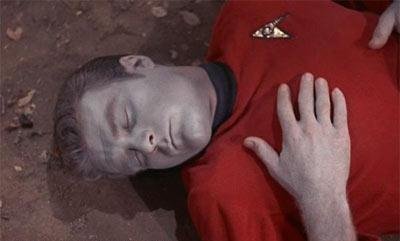 As I was trying to come up with something, I was watching an episode of the original STAR TREK, and it was one of many scenes of Kirk, Spock and McCoy beaming down to a strange planet with a generic ensign in tow who almost always ended up dying in some bizarre way. This unfortunate schmuck would almost always be wearing a red colored uniform shirt. So many of these guys died on the show over the years, and in the movies and later series as well, that the term “red shirt” was coined. Call a guy a “red shirt” and he was certainly destined to show up early on and die just as quickly…and usually quite painfully.For some reason, the idea of naming my company after these unfortunate bastards really appealed to me, and that was that. I take pride in that Red Shirt Pictures has lasted longer than the lives of all those crimson-clothed Enterprise crewman put together. At least so far…anyway.On the featurettes you assembled for EFFECTS and NAIL GUN MASSACRE, you worked with a lot of pre-shot interview footage. What kind of challenges did this create for you as a director and editor and how did you deal with them?
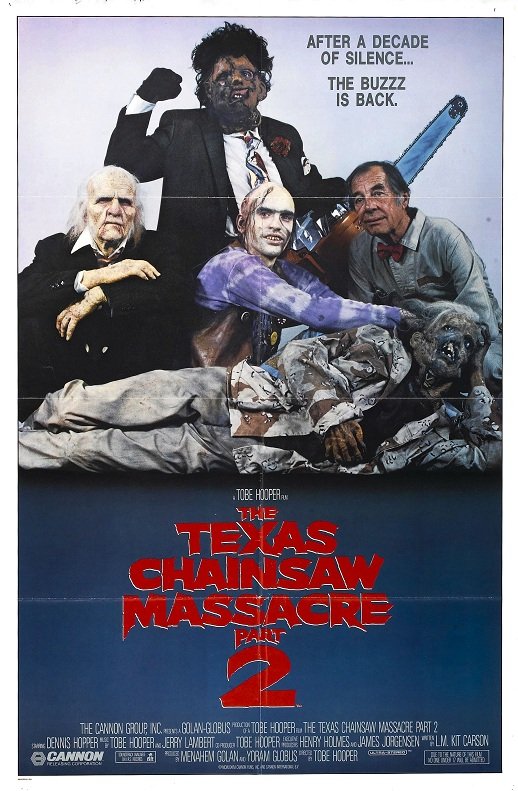 As a preference, I will always be there for the shooting of any interviews. These days that happens a little less since my being in Detroit isn't conducive being in LA or NYC on a moment's notice, and that's where most of the interviews or commentaries take place, naturally. Still, as a filmmaker/director/producer/whatever, it is always best to be there on the day for a variety of reasons. You can tweak the set-up, meet and greet the talent, ask the questions in your own way, etc. But as I said, sometimes that isn’t possible. For example on CHAINSAW 2, I had to interview the screenwriter L.M. Kit Carson, but I couldn’t afford to fly myself out to shoot it and I was in the middle of editing FLESH WOUNDS at the time, so I hired David Gregory to produce the interview for me. Of course David is a top professional and a great friend, and so I knew I had nothing to worry about as far as the quality of the presentation and making sure the right questions are asked, and so on and so on. Those are ideal circumstances of course. And since then I've worked with great folks like Buz "Danger Wallick, Andrew Kasch, and a host of other great cinematographers and producers in LA, so it's less of an issue with me not being there these days.
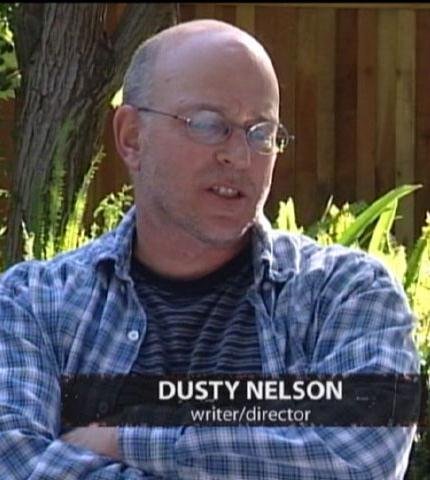
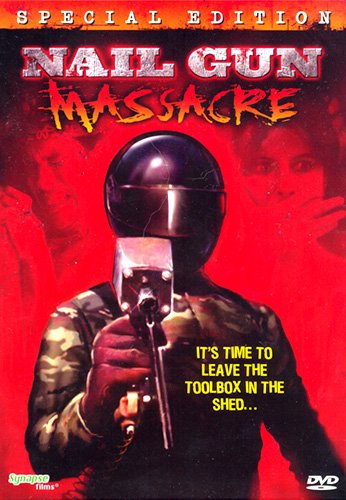
 However, as with EFFECTS and NAIL GUN MASSACRE, I had a situation where it was footage being delivered to me that I was not directly involved with as far as getting it produced. This can be a huge can of worms and I’ve found you usually end up on the bum side of the deal with situations such as these, however I lucked out on EFFECTS and NAIL GUN in that the interviews were full of great information and stories with enthusiastic participants.The Los Angeles interviews for EFFECTS were done by a professional crew and filmed outdoors in John Harrison’s backyard. While I normally dislike exterior interviews due to the constantly changing light, and audio distractions (car horns, birds, planes, etc.) what was gained by this was a “college reunion” atmosphere which wouldn’t have been achieved in a studio. NAIL GUN MASSACRE was different in that I had footage that was not shot in optimal conditions (there was a loud freezer motor in the background the whole time) but the interviewer, Loyd Cryer, had such a good rapport with the director Terry Lofton, and their decision to film the interview in one of the locations from the film itself gave the interview a real laid-back genuine quality, even if the audio was a bit problematic.So I’ve lucked out so far with pre-shot stuff so far…knock on wood.You’ve done a lot of work for Don May Jr. and Synapse Films. How did you two strike up your working relationship? What is your favorite title amongst the work you’ve done for Synapse and why?
 Well Don and I go way back. I was actually on the DAWN OF THE DEAD laserdisc box set in the Fan Testimonials section that his former company, Elite Entertainment, put out in the mid-90s. I attended an autograph session with George Romero at the Monroeville Mall which Elite was videotaping for the laserdisc set back in 1994. Don was there, but I never met him. But someone taped me and I ended up on the disc anyway. Well somehow through doing the AB fansite and my own webpage, I came into contact with Don shortly after he formed Synapse Films a few years later. One thing led to another, and I ended up running the website for Synapse Films for a while, before I went full-time at Anchor Bay.He ended moving just down the road from me in Michigan and so we always kept in touch, and eventually started working together once I got into featurettes and documentaries. I helped him get
 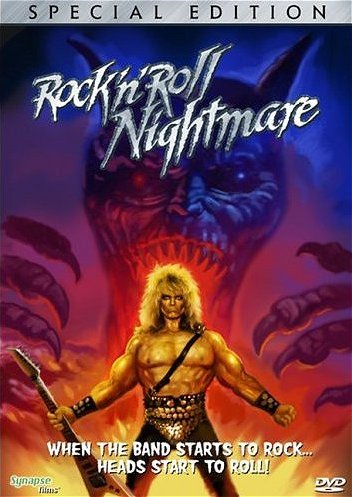 EFFECTS which led to me doing that one with him, and he set me up with NAIL GUN MASSACRE, ROCK ‘N’ ROLL NIGHTMARE, and a lot of other titles in 2005 when I first went out on my own. Don is, quite possibly the most quality conscious person I know in the business. If I had a movie, I’d want him to handle the production of the DVD. Plus he’s just great guy to have lunch with…the stories he can tell…As for a favorite, EFFECTS would be the easy choice, but of the other projects I’ve done for him, I really enjoyed ROCK ‘N’ ROLL NIGHTMARE. Jon Mikl Thor was a real sweetheart and the little career retrospective I did on him for the DVD was a blast to edit. Also I got to do a music video and a couple of behind-the-scenes compilations as well which was a nice change of pace. Plus…have you seen the movie? It’s complete ‘80s insanity. Nothing like the sight of Thor with big poofy metal hair, clad only in a diamond studded thong, fighting a giant demon puppet for 10 minutes mastered in glorious high definition. Truly unique.Synapse
 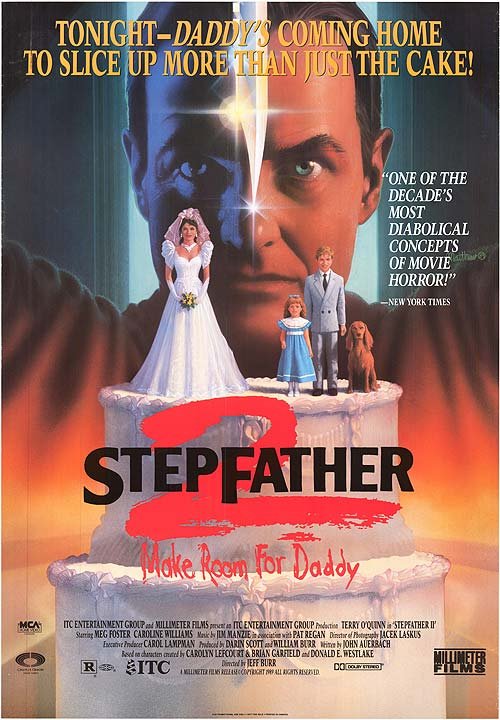 and I will probably always be together in one form or another. They are family. Recently I had actor David "Flyboy" Emge interviews for both BASKET CASE 2 and THE BOOBY HATCH. That was interesting as I really wanted to primarily focus on BASKET CASE 2 with David, but his recollections of BOOBY HATCH ended up being the highlight of the whole interview.But I have to say being able to work on the recent STEPFATHER II with them was a fantastic experience. It's the most packed featurette I've done for them since EFFECTS, and being that it is a Jeff Burr film, I had wonderful participation from him, and his cast & crew. They all still love him, and the post-production that the film went through was chaotic and made for fascinating cautionary tales. It's the type of featurette you wouldn't be able to do at a major studio.How boring would the world be without Synapse Films? Pretty damn boring indeed if you ask me!