

LADY FRANKENSTEIN: Strange Desires Meet Drive-In Feminism In The Laboratory

Lady Frankenstein is one of the more unusual films to emerge from New World Pictures during its formative years. Rather than tackle then-current exploitation themes popular in the early 1970's like women in prison movies and biker flicks, it harkened back to the kind of gothic horror elements that Roger Corman explored in his Edgar Allan Poe cycle for A.I.P. That said, it's a much trashier variation on that kind of material, with a dinstinctly 1970's level of sex and violence that brings it into line with the rest of New World's output around that time. This film represents a sort of drive-in feminism take on the Frankenstein mythos, with anti-heroine Tania Frankenstein (Rosalba Neri) returning home for a visit with her father, the Baron (Joseph Cotten). He's on the brink of reviving the dead and rushes through an experiment using a murderer's damaged brain to revive his latest prototype. The end result brings both success and tragedy: the monster (Paul Whiteman) is successfully revived but murders the Baron and escapes into the countryside.As the Baron's monster attacks the townspeople - showing a unique ability to crash his way into situations involving naked women - Tania decides to complete her father's work. She talks his faithful assistant, Dr. Marshall (Paul Muller), into donating his brain so she can place it in the body of handsome but mentally
 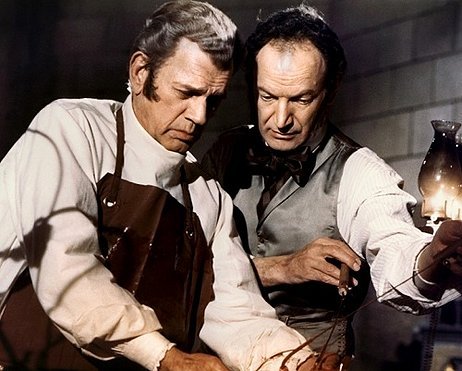 handicapped man who works at the castle... thus allowing her to create a man who is her intellectual equal and also able to satisfy her sex drive. Unfortunately, she has to contend with local cop Captain Harris (Mickey Hargitay), the ever-more-suspicious locals and the monster, who is bumping off all responsible for his plight as he works his way back to the castle.
 The end result isn't likely to be championed by the aesthetes of the horror crowd: it has a style that evokes the tackier side of Hammer's early 1970's output combined with the heightened sleaze quotient of an Italian genre outing from the same time. It also has one of the goofier makeup designs for Frankenstein's monster, a sort of huge, bubble-headed look that resembles a gruesome version of Frankenberry.That said, a horror movie doesn't have to be classy to be entertaining - and Lady Frankenstein delivers the goods in its own Eurotrash sort of way. It was directed by former Corman actor Mel Welles, who had become a director in Italy since his days in Corman's Filmgroup productions. His approach
  is workmanlike but enthusiastic, a style that is abetted by above-average production values for a film of this budget. The Italian crew further aids the level of professionalism: Ricardo Pallottini's photography gives the action a nice grimy-gothic look and Morricone protege Alessandro Alessandroni gives it a nice blood-and-thunder musical score that conjures up fond memories of Claudio Gizzi's work on Andy Warhol's Frankenstein.Better yet, Welles gets game performances from a solid cast: Cotten is slumming here but he brings an effective, weary sense of gravitas to his role as the Baron and Euro-cult regulars like Hargitay and Muller turn in respectable performances. That said, the movie belongs to Neri
  as the title character. She plays her role like the Euro-horror equivalent of a film noir femme fatale, giving it all the intensity and overripe sexiness that fans of this cinematic style expect. When she takes control of the story's second half, her work has a real sensual charge to it.In short, Lady Frankenstein represents the junk-food end of the gothic-horror spectrum - but it delivers the kind of tawdry thrills its ad campaign promises ("Only The Monster She Made Could Satisfy Her Strange Desires!") and Euro-trash fans will get a kinky kick out its fast-paced sleaze/gothic approach.