

KICK-ASS: A New Kind Of Super Villain, "The Unreliable Narrator"

Even after seeing it twice, Your Humble Reviewer still had plenty to ponder on the subject of Kick-Ass. This controversial riff on the superhero genre has attracted admiration and admonition in equal measure. Some see it as a superior version of the superhero film, others see it as a devious satire and some see it as a confused attempt at doing both. There's even a contingent that sees it as a cynical cash-grab that tries to have its cake and eat it, too, occasionally tweaking the expectations of its core audience to please itself even as it panders to their desires for bloodshed and self-reflexive hipness.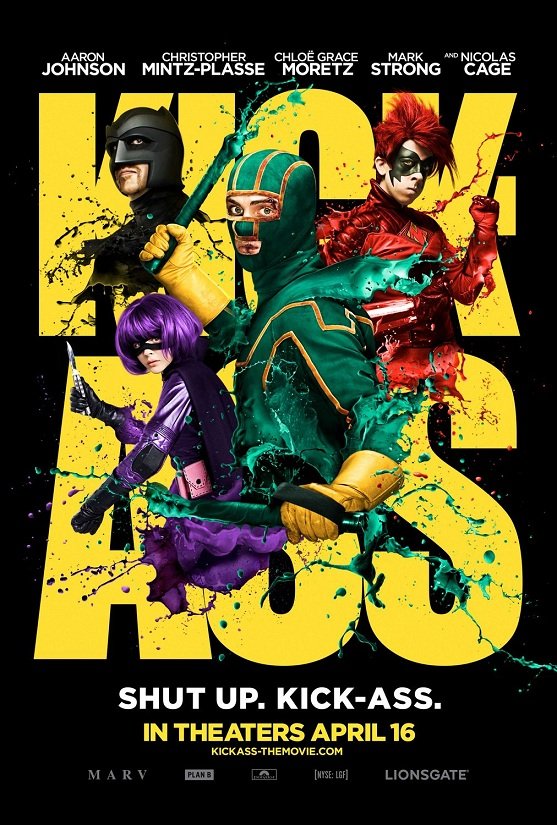 If Your Humble Reviewer has to pick a side, he'll fall in with the "devious satire" gang. This is because Kick-Ass feels subversive in a way that neither its detractors or admirers give it credit for. The reason for this opinion is rooted in the film's use of "the unreliable narrator"... more on that in a moment.First, a bit of plot summary. The storyline of Kick-Ass takes its focus around Dave Lizewski (Aaron Johnson), a nerdy but earnest teen who narrates the film and serves as our nominal hero/audience-identification figure. Fueled by a steady diet of comic books and a naive desire to bring some heroism into his drab world, Lizewski turns a diving suit into a superhero costume and tries to combat crime. His first encounter results in bone-crushing tragedy and a lengthy hospital stay. He emerges from the hospital with deadened nerves, steel-reinforced bones and a desire to continue his superhero dream.
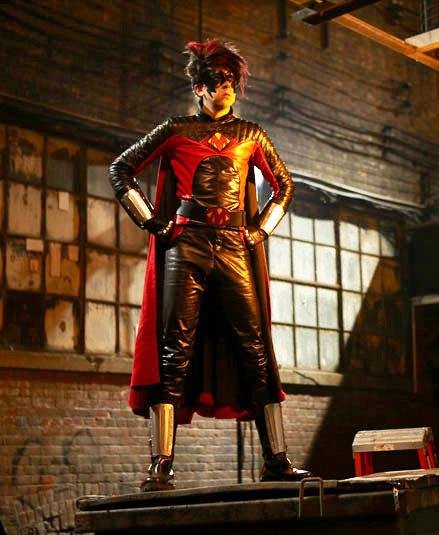
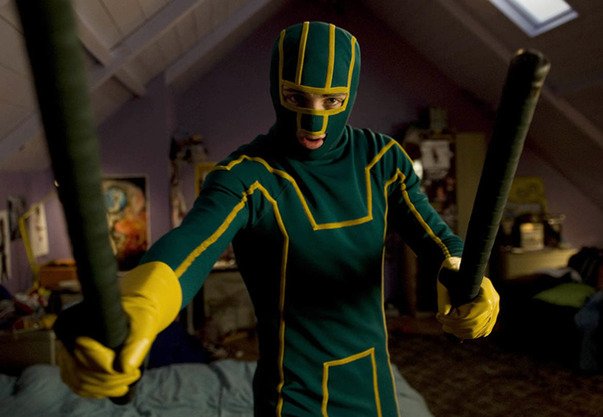 Dave skyrockets to fame when a video of his costumed alter-ego fighting a gang of thugs becomes a YouTube sensation. This earns him the attention of Big Daddy (Nicholas Cage), an embittered ex-cop who is plotting revenge on the criminals who ruined his life and training his daughter, Hit Girl (Chloe Moretz), to be a pint-sized killing machine. Also watching is Frank D'Amico (Mark Strong), a local crime boss who mistakenly believes Dave is interfering with his drug trade (the real culprit is Big Daddy) and wants to kill him as a warning to aspiring do-gooders. Frank's nerdy but ambitious son, Chris (Christopher Mintz-Plasse), fashions his own "hero" alter-ego, Red Mist, to befriend Kick-Ass and set him up for a fall...
 The end result definitely delivers everything its target audience was hoping for: Kick-Ass has a sly sense of humor, a sleek and eye-popping visual style fueled by a genuine comic-book color scheme, plenty of in-jokes and knowing nods to the superhero mythos and several dazzling action sequences that don't flinch when it comes to bloodshed. The script, adapted by Jane Goldman with director Matthew Vaughn from a popular comic book, juggles a dense set of subplots in a comprehensible manner and keeps several character arcs in focus. Best of all, Vaughn's direction offers the mix of technical proficiency and kinetic flair necessary to make the material fly.Kick-Ass also boasts a well-judged lineup of performances that skillfully navigate the film's blend of pulp and psychology. Johnson is convincingly earnest as the audience's cinematic surrogate, skillfully blending the character's nerdishness, sensitivity and gutsiness to create a sympathetic underdog. Mintz-Plasse finds an intriguingly dark variation on the nerd persona he's been refining since Superbad while Cage fuels his Method-style quirks
  into a winningly eccentric characterization and Moretz shows an eerily adult grasp of the badass persona her character requires. Elsewhere, Lyndsy Fonseca offers up an amusingly libido-inflected take on the "hero's girlfriend" archetype, Strong and Michael Rispoli perform droll goombah caricatures and Clark Duke and Evan Peters add the occasional grace note of wit as Johnson's wiseass-nerd pals.However, it's easy to see why a lot of people are having trouble with Kick-Ass despite all these attributes: its tone. Simply put, it never allows the viewer to stay in one emotional or psychological area for very long and constantly shifts moods and styles in a very jarring fashion. One moment it's playing violence and pain for squirm-inducing realism, the next minute it's played for cheap thrills. One moment finds the heroes portrayed as delusional and/or insane, the next finds them portrayed in a worshipping light. The shifts from satire to fantasy to realism are enough to induce whiplash.
 That said, a reason behind this jarring blend of tones revealed itself after a second viewing - with all the onscreen excitement, it's easy to forget the entire story we are seeing is told by Dave, filtered through his perspective. The events reveal him to be delusional and dangerously naive in his take on the world but, as a narrator, he needs to make himself the hero. His attempts to impose a heroic, redemptive take upon a disturbing, often tragic story creates the schizoid tone the audience feels: no matter how he tries to frame it, the disturbing nature of what is going on keeps bubbling to the surface. He's the classic "unreliable narrator" and we, the audience, are the victim of self-deceiving whims.At least that's Your Humble Reviewer's take on it. The only ones who really know are Vaughn and Goldman and it'll be interesting when they decide to spill the beans. Whatever the case may be, Kick-Ass toys with its genre in a daring way and delivers a thrilling package that puts most comic-book flicks to shame in terms of vision, complexity and sheer cinematic verve. If you're a comic book fan and you haven't seen it, you are missing out.