

IMPOSSIBLY FUNKY!: Beyond The Valley Of The Film 'Zines

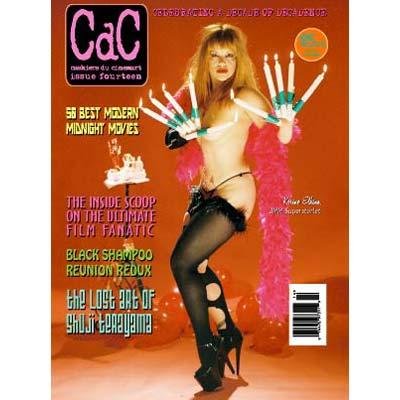
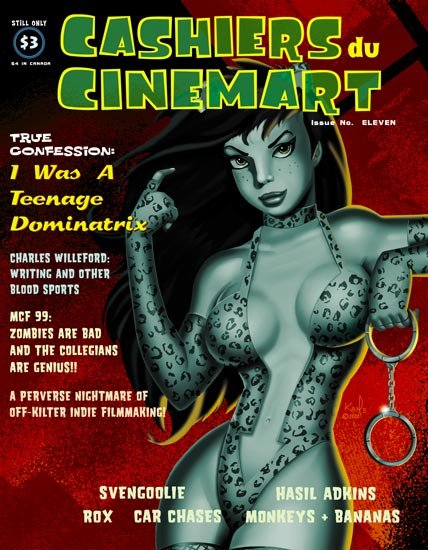
If you're of a certain age and into following cult movies, chances are you've bought plenty of 'zines. Before the internet changed communication within subcultures, these self-made publications were the way to get information on your underground hobby of choice without any of the filtering/softening-down that often comes with mainstream publications. In fairness to the professional publishing world, honesty and directness didn't automatically pave the way for greatness in a 'zine. Plenty of these underground publications are more interesting for their attitude or what they unconsciously reveal about their writers than the actual quality of the writing. That said, there were a handful of cult movie 'zines that beat the odds and managed to offer young, hungry minds the best of both worlds: incisive, quality writing delivered with a no-bullshit attitude. For instance, Psychotronic is perhaps the prototypical example of this kind of cult movie 'zine. A lesser-known but just as worthy 'zine is Cashiers Du Cinemart, a 'zine that Mike White began to publish in 1994. Said 'zine automatically carried a certain cachet because White is the editor/critic behind Who Do You Thing You're Fooling?, the infamous short film that compared scenes from Reservoir Dogs and City By Fire in a side-by-side style. However, there was much more than rabble-rousing to this 'zine and its cult of readers know this well.
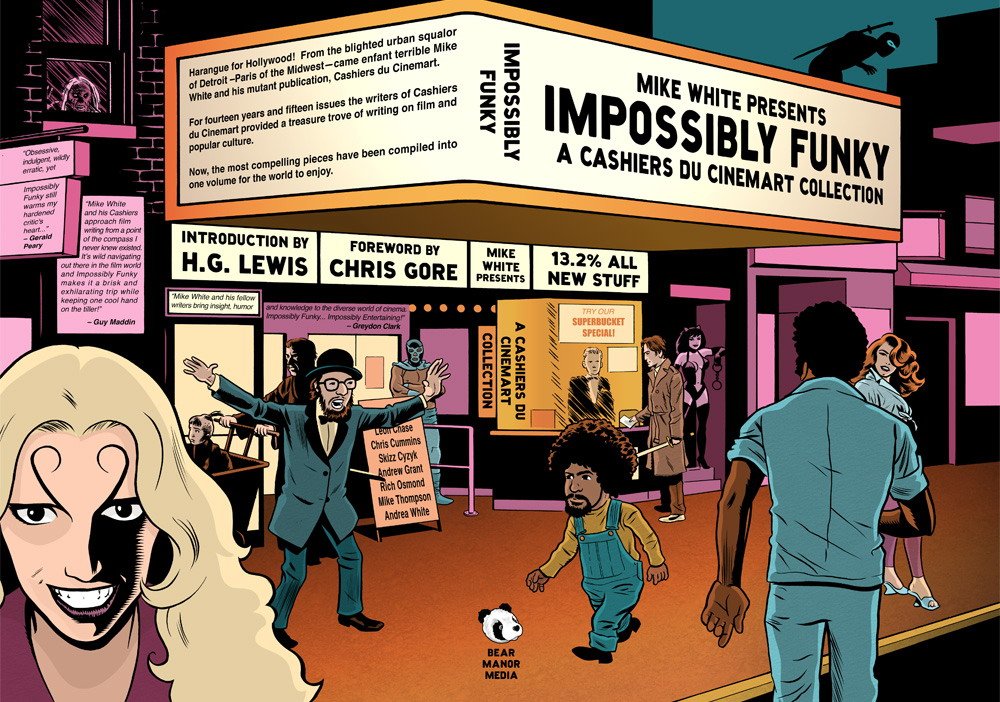
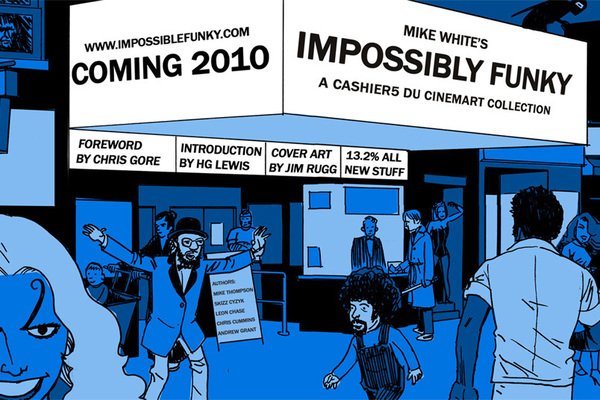 Unfortunately, zines have a limited reach when it comes to circulation and not everyone has gotten to sample the Cashiers Du Cinemart style of film criticism. Thankfully, this problem has come to an end with the publication of Impossibly Funky!, a book-length compendium that draws its contents from the magazine's 12-year history. Even better, it's more than just a collection of reprints - in fact, White and his contributors have gone back to expand and/or rework several of the pieces it contains (this explains the appearance of "13.2% all new stuff" on the cover).
 Things begin with an introduction from H.G. Lewis and an amusing, unorthodox foreward from Film Threat founder Chris Gore - in which explains the reasons he owes Mike White an apology that he has not yet given. After that, Impossibly Funky! immediately dives into White's Tarantino-related controversy. In the space of a few articles, White reveals how his Reservoir Dogs-critiquing short led to multiple attacks on his character - and they didn't come from Tarantino or any related parties. Instead, his fellow filmmakers and film critics were the ones who turned on him. The articles are a fascinating read and offer a lesson in the dangers of speaking truth to power (and how mercenary/cannibalistic the film-crit and film-festival worlds can be). The section closes on up note with "Tarantino In A Can," a funny piece that discusses the frequent use of bathrooms as an important setting in Tarantino's work.
 The next section of the book is devoted to a series of feature articles. Often the subjects are authors whose hard-boiled work served as the subject matter for films of varying quality - David Goodis, Charles Willeford and James Ellroy are amongst the authors whose work and lives are explored with a detail worthy of a conventional print publication. White and company obviously have a special sympathy for these oft-misunderstood writers and the work in these articles does them justice. Other articles in this section cover everything from controversial Japanese director Shuji Terayama to a double feature of Dixie Dynamite and The Great Texas Dynamite Chase. Perhaps the most interesting is a piece on the super-obscure The Big Crime Wave, an indie comedy that sounds like one of the great unseen cult movies.
 The third section is devoted to a series of articles on scripts and the development process. Included are explorations of the tortured scripting-and-rewrites process behind such films as Alien 3, the Planet Of The Apes remake and the ill-fated attempts at rebooting Superman that led to Superman Returns. Using the both produced and unproduced drafts, each article presents an effective critique of how carelessly Hollywood treats properties with proven track records and how even the most talented writers can get lost in the development machine. It's also worth noting that Cashiers Du Cinemart has always been a 'zine that doesn't fall into the underground publication trap of automatically sneering at films for being mainstream - and these pieces accordingly balance their satiric wit with a love for the good films Hollywood can make when it wants to.
 The fourth section of the book is dedicated to interviews with everyone from Bruce Campbell to Monte Hellman. Of particular interest are the Keith Gordon interview, which gets into the difficulties of doing challenging material in the modern film market, and the Guy Maddin interview, which is notable for the eccentric playfulness of its subject. The fifth section deals with thought-pieces on the subject of Star Wars. It's arguable that no cult filmmaker ever betrayed his fans the way George Lucas did with his dismal prequels to the original Star Wars trilogy - and White and crew do a good job of skewering them from a fan's-eye perspective.
 The sixth section of the book is devoted to Black Shampoo, a lesser-known blaxploitation opus that holds a special place in Mike White's heart. Fittingly, it offers loving testimonials to the film as well as interviews with several key people involved in its making: director Greydon Clark, composers Gerald and Gary Lee and stars John Daniels, Tanya Boyd and Skip E. Lowe. This section is where the 'zine quality of true-believer obsession shines through: a subject that would barely rate as a footnote in other publications gets a loving and extensive exploration here. It's also interesting to get a glimpse into the lives of the people who participated in the film and the different ways they deal with their cult-flick
  infamy.The last set of articles is entitled "Life" and offers a few pieces about the lives of the writers, the most interesting being White's chronicle of his career as a movie-theater employee. It's a classic zine-style piece, offering a sympathetic but honest portrait of a working-class gig from the worker's point of view, and it will give the reader a new appreciation for the work done by the kids at your local multiplex.It all adds up to a quality read for cult movie people, particularly if your taste runs the gamut from multiplex fare to obscuro-indies. Impossibly Funky! also offers a nice way to soak up the vintage 'zine vibe for those who remember it fondly as well as those weren't around for it. Like the magazine that spawned it, this tome is an underdog that deserves your support.