

HOT STUFF: The Secret Story Behind The Glitter And The Groove

Historically speaking, disco has always been the bastard child of popular music in the eyes of the news media. They treated it like a fad at the outset, developed a grudge towards the genre as it rose to prominence and then rushed to slam the lid on the coffin when it fell from grace with the listening public. Since then, it has been mostly dismissed as kitsch when it has been periodically revived by news outlets. In death as in life, disco has suffered for a lack of serious exploration from the news media.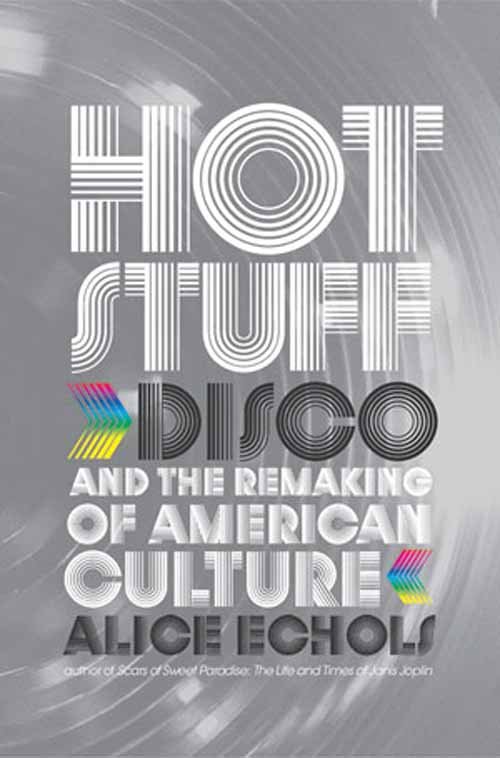 Thankfully, disco has received a bit more kindness via book-length studies of the genre. Over the last decade, a small but noticeable crop of disco studies have sprung up that take it seriously as a musical form and go into the details of how it was made and who played it. However, the book-length study of disco is a young genre and still has plenty of room to grow beyond basic facts-and-people journalism. There's a need for greater context between these facts, something to help the reader understand the why in addition to the how, when, where and who.Thus, it is nice to report that a new book has fired an opening salvo in the attempt to bridge the context gap between the disco facts and sociological mysteries of how the genre came to be. The book is entitled Hot Stuff: Disco And The Remaking Of American Culture. That's a title that promises a lot but the book's author, Alice Echols, is uniquely well-equipped to make good on its promise. Not only is she a Professor of American Studies and History at Rutgers University, she was also a d.j. during that early 1980's era in which disco supposedly died.Hot Stuff makes a case for disco's enduring influence by exploring its complex relationship with a number of societal trends that emerged duri
 ng the early 1970's. A brief but compelling introduction sets the stage for Echol's explorations by explaining the direct relationship she developed with the genre and its culture by working as a d.j. at the Rubaiyat, an Ann Arbor club. Her experiences shed some interesting light on the cultural complexities of how a club of the era functioned. More importantly, they also allow her to introduce a series of ideas that she explores throughout the remainder of the text.From there on, Echols breaks her study of the relationship between society and disco down into sections aimed at specifics force that exerted a symbiotic push and pull on the genre's development and level of influence. Topics include how the rise of disco dovetailed with a shift in black masculinity from the finger-pointing, politicized macho men of early 1970's funk to the smoother, more urbane "love men" like Barry White, the relationship between gay liberation and the development of discotheques as societal enclaves for gay men and the conflicted relationship between women and the genre (i.e. women were welcomed in the music as divas but often rejected from club life by the gay-driven nightclubs).
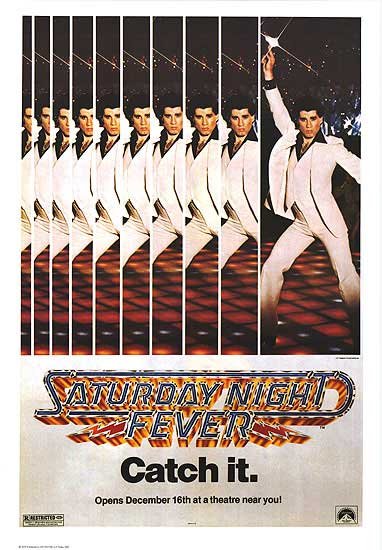 One really interesting chapter deals with the rise of the "gay macho" ideal in disco life, charting how gay men created a jeans-clad, short-haired stylistic ideal that represented their evolution from the effeminate, tragic gay-male persona of old to a more assertive, self-reliant variation that became the defining standard for gay men in the disco scene. Movie fans will also be fascinated by an excellent chapter on the film Saturday Night Fever that explores its making in great detail and then analyzes its relationship to the disco scene. In contrast to many disco scholars who reject it as pure Hollywood fiction, Echols makes a strong case for how it works as a critique of the racist and sexist attitudes that disco frequently found itself fighting against.The book closes with chapters that prove how disco survived its supposed death during the infamous 1979 anti-disco rally at Comiskey Park by infiltrating pop music via club-influenced musicians like Madonna, Prince and Michael Jackson as well as less-likely students like Public Image Ltd. An intriguing coda reveals how the distance provided by the passage of time has allowed disco to become a "safe music," thus ensuring its influence will continue.As the above descri
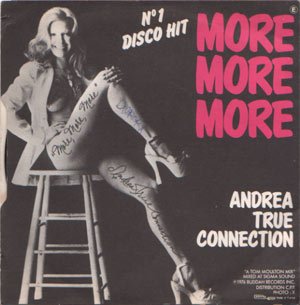 ptions should reveal, Hot Stuff offers its readers plenty of food for thought. Better yet, it does so in a concise style that avoids belaboring the ideas it explores (the main text of the book runs about 240 pages) and backs that text up with a painstakingly detailed set of footnotes that offers the reader plenty of additional material to explore.Echols' writing is as intellectual as you might expect from a professor but she avoids allowing the book to devolve into term-paper blandness via a nice sense of restraint and boundless enthusiasm for her subject matter. She also keeps the text fresh via nice thumbnail-sketch profiles of disco performers like Donna Summer and Sylvester within the chapters and periodic sidebars that explore the history and influence of particular iconic disco songs like "More, More, More" and "Stayin' Alive."All in all, Hot Stuff is a fine testament to disco's enduring power, delivered with a bracing mixture of intelligence, enthusiasm and uncompromising opinion. The definitive disco history has yet to be written but Echol's savvy tome will definitely be an important reference for it.