

GALAXY OF TERROR: Voyage To The Planet Of Metaphysical Schlock

Anybody can make a knockoff of a hit film. All it takes is a basic understanding of the elements that made that hit film a success and the willingness to repeat them to a point that stops just shy of overt plagiarism. However, the best knockoffs add a little something extra between all the studiously borrowed elements of success - a clever twist or an element of eccentricity that adds the extra jolt of inspiration needed to transcend its derivative origins.
The ability to add this x-factor into the mix is what separates the men from the boys in the field of exploitation filmmaking - only the savvy survive. Roger Corman was the best at pulling off this cinematic sleight of hand and his knockoffs were often good enough to go toe-to-toe with their inspirations: Death Race 2000 was superior to Rollerball and Piranha was so good that Steven Spielberg himself prevented Universal Pictures from suing it for its resemblance to Jaws.
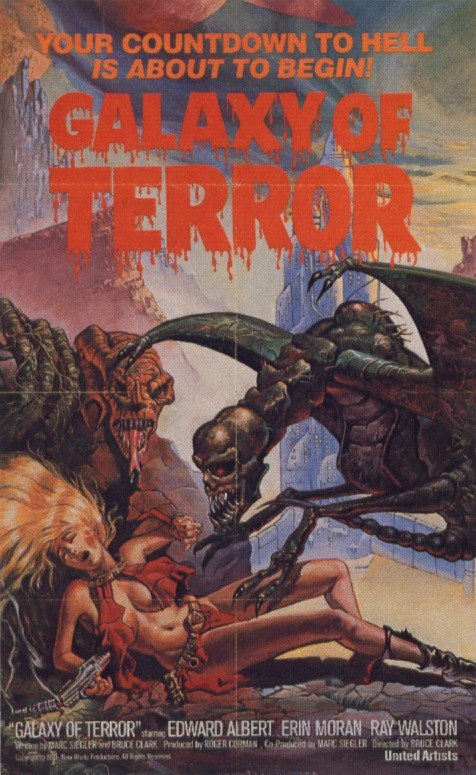
However, one of the most unique knockoffs in the Roger Corman production-canon is Galaxy Of Terror. It was designed to be the drive-in version of Alien and it delivers handsomely in that regard while also dishing out some surprises that will shake the audience up.
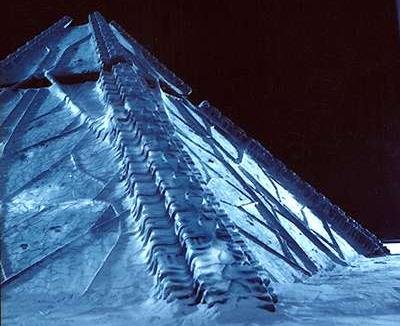
The plot of Galaxy Of Terror plays like a stripped-down, ready-for-action mixture of Alien and The Black Hole. A group of space jockeys are hand-picked by a mysterious "Master" to fly to a distant planet and investigate a distress signal from a settlement located there. They crash-land for unexplained reasons once in the planet's orbit and discover that everyone in the settlement has been brutally killed by unseen attackers. They also discover a pyramid-shaped building that they decide to investigate - and that's where things get decidedly strange - and lethal...
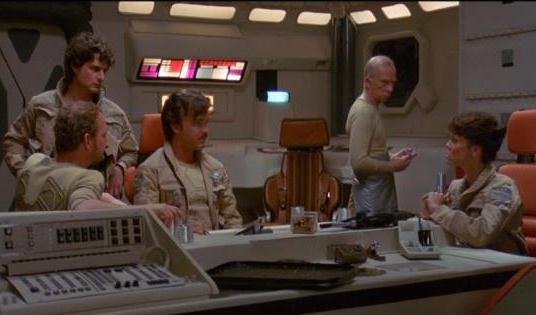
Rest assured that Galaxy Of Terror wears the influence of its inspirations on its sleeve: the production design mixes space-tech hardware and optical effects inspired by Star Wars with the gruesome makeup effects and H.R. Giger-derived production design that were clearly inspired by Alien. B-movie fans will get their fill of bloody death scenes here: highlights include a crewman being attacked by his own severed arm and a tentacle-squeezing death scene capped by a spectacular exploding-head effect. There's even an added bit of kink in the form of a giant space-worm that, uh, fatally molests a shapely female crew member.
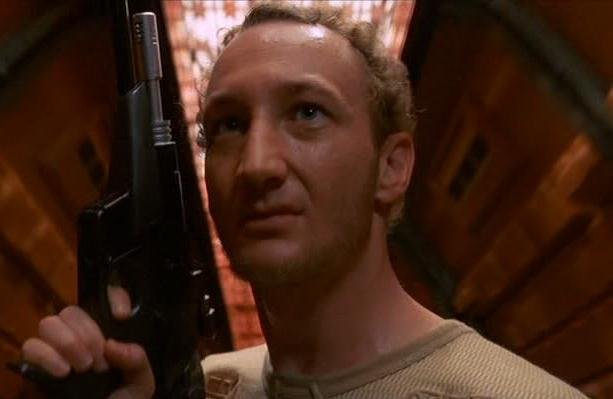
It helps that Galaxy Of Terror is packed to the rafters with well-chosen b-movie stars. Edward Albert makes a solid audience-identification figure as the likeable, smart Cabren - the hero within the film's ensemble - and there are also effective turns from Zalman King as an arrogant, hotheaded team member and future David Lynch favorite Grace Zabriskie as the tough-minded ship captain who is haunted by a past trauma. The names backing up these notables include Robert Englund as an engineer, Erin Moran ("Joanie" from Happy Days) as a psychic, Ray Walston as the ship's old-timer cook and - best of all - Sid Haig as a frightfully intense warrior who uses large, multi-pointed crystal throwing stars as his weapons of choice.
However, the way in which these exploitable elements are delivered is far less clear-cut than the synopsis suggests. For starters, the film's style has an ominous, nightmarish vibe from its first frames. Director Bruce Clark and screenwriter Marc Seigler opt for a moody, often surreal style that gives the proceedings an odd, often surrealistic bent. Cinematographer Jacques Haitkin, who would later shoot A Nightmare On Elm Street for Wes Craven, utilizes a hazy look shot through with bold primary colors that give the proceedings a dreamlike, almost Italian-horror look. Equally important is the production design by James Cameron, who seems to be road-testing the aesthetic he'd perfect in Aliens. There's also an eerie, droning synthesizer score by Barry Schrader that sounds like something Klaus Schulze might have conceived on a bad acid trip.

That said, the most distinctive element of Galaxy Of Terror is its final reel, which pushes the film's otherworldly creep-factor into interstellar overdrive. Without getting into spoilers, the last ten minutes of the film take the viewer into metaphysical territory, culminating in a final dialogue exchange that imparts a bizarre, parable-style meaning to everything that has come before. It will leave some viewers scratching their heads but it's got the kind of go-for-broke ballsiness that transforms this film from a skillfully-done imitation into a wonderfully weird beast of its own kind.In short, Galaxy Of Terror is must-see viewing for students of Roger Corman productions and proof that knockoffs can be creative. They don't make 'em like this anymore - and even when they did make 'em, they were seldom as cosmically mind-blowing as Galaxy Of Terror.