

DISCO DISCHARGE - DISCO BOOGIE: You Can Kill A Name But The Beat Never Dies
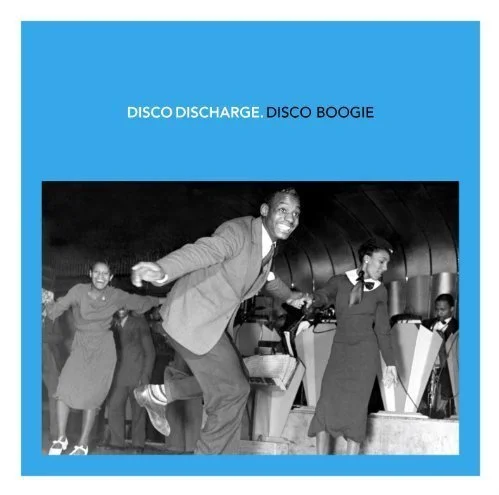
As the fans of this genre know, disco did not "die" at the end of the 1970's. Instead, it moved back into the underground scenes from whence it came and mutated into newer, differently styled forms that kept the beat alive while reworking the overall sound. One of the best and most successful disco mutations was the "boogie" sound. This rhythmically insistent variation of disco worked in a lot of electronic elements as it progressed and thus formed a bridge between disco and the synth-dominated sounds that would dominate dance music from the mid-1980's on. So what exactly does boogie mean? It's a descriptive term that was once applied to "boogie woogie" piano music, a style where the bass line played by the left hand is just as important to the song as the melodic line played by the right. In disco, it refers to a distinct variation of the genre where complex, melodic basslines drive the overall sound as strongly as any the other elements of the instrumentation. The melodies also tend to be very busy with funky yet melodic hooks that give it unique blend of sweetness and grit, even when the instrumentation is predominantly synth-based.
 The new Disco Boogie volume of the Disco Discharge serves up a nice primer in this style for the uninitiated, starting with its late-1970's genesis and continuing through the mid-1980s. In the late-1970's area, Carte Blanche whips up a delightful confection with "Do You Like It Like That" that layers its pulsating bass core with airy rhythm-guitar hooks, ethereal synths and thoroughly ingratiating chant vocals and Toto's disco evergreen "Georgy Porgy" blends beguilingly jazzy piano licks and a subtly insistent beat with hypnotic vocals at chorus time from diva Cheryl Lynn. On a similar tip, Average White Band's "Let's Go Round Again" is a winner from 1980 that brings 1970's-style Philly Soul orchestrations into the boogie era with a thumping bass line.
 There is also plenty of the synthesizer-layered melodicism that associate with the genre's early 1980's heyday. For instance, D-Train's "Keep On" is one of the all-time boogie gems, a grandiose electro-opus where percussive vocals sell a message of positivity over an elegant blend of carefully-arranged synths and live instrumentations. It's inclusion here is all the sweeter since it's included in Francois Kevorkian's stellar 12-inch mix, which really makes the most the record's melodic twists and dense layering. Skyy's "Call Me" is a proto-electro classic that has echoes of the S.O.S. Band as it lays out a sparse but memorable groove built on a synth-doubled bass lick. Even the pre-rock classic "Autumn Leaves" gets a sleek synth-update from the Illusion Orchestra (a.k.a. new wave production auteurs Steve Jolley and Tony Swain).
 And that's not all - curator Mr. Pink adds plenty of delightful rarities and lesser-known tracks, like the Belgian jazz-disco gem "Switch" by Benelux With Nancy Dee (dig that lead flute!) and Maxine Singleton's stomping synth-funk opus "You Can't Run From Love," which comes from the same writing and production team who created "Holiday" for Madonna. Everything included is mastered skillfully in either its album-length or 12-inch versions and Alan Jone's witty and informative notes seal the deal.In shout, Disco Discharge: Disco Boogie lives up to its title by delivering a hard-grooving good time from start to finish and is another winner from Mr. Pink and Harmless Records.