

SUPER: From Zero To Hero And Back Again

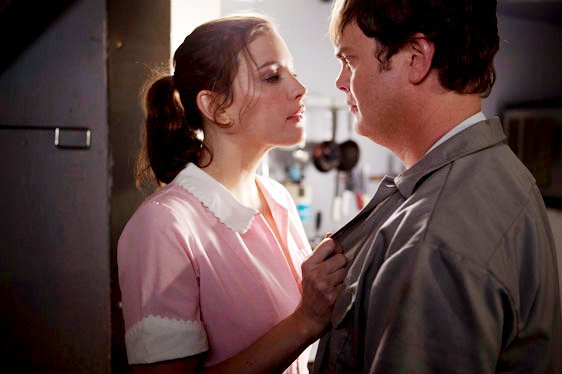
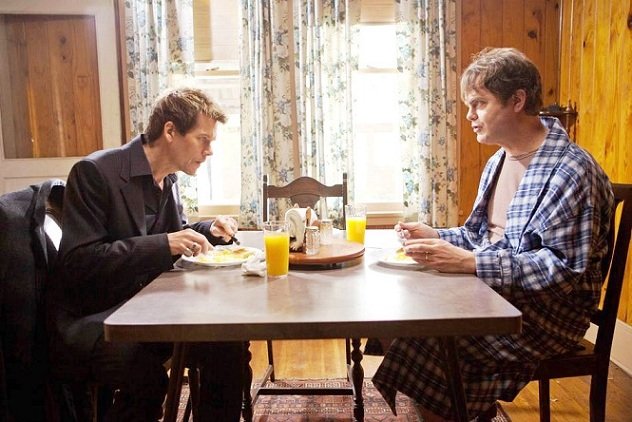
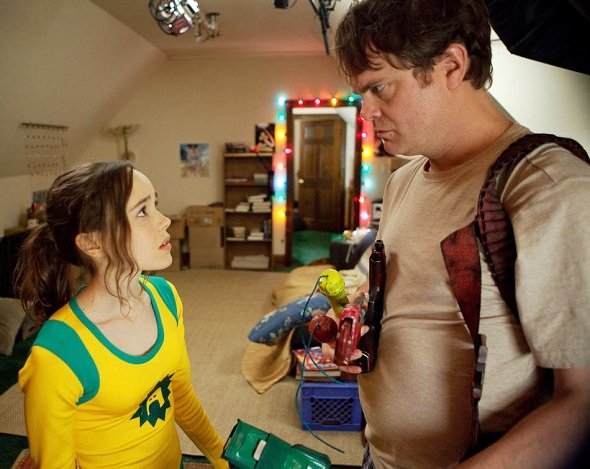
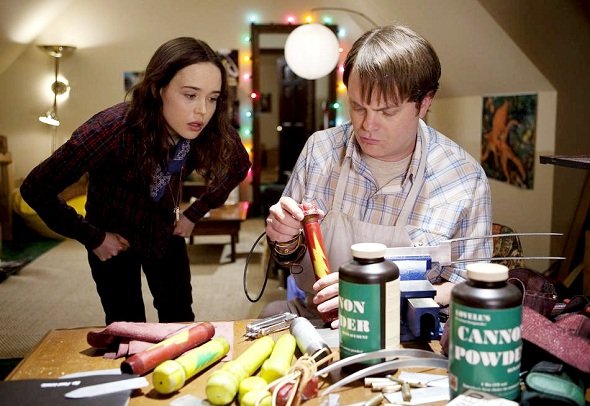
The superhero movie is a ripe and deserving target for parody. The idea of satirizing the genre by exploring its cognitive dissonance with the real world and the foibles of actual human beings is a great idea. Tackling such an idea with a style that takes us through a gamut of moods, from slapstick humor to painfully real drama, could transform such an idea into something unforgettable. Super tries its hand at this tall list of orders and takes a full-throttle approach to its task. It would be nice to say it is a success... but unfortunately, it ends up being proof that an ambitious idea can collapse in on itself if it 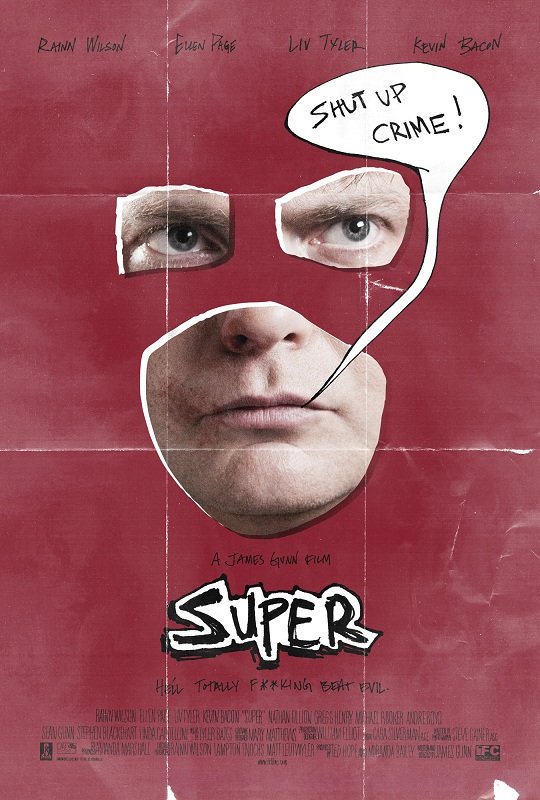 isn't handled with care.Super tells the story of Frank (Rainn Wilson), a short-order cook and lifelong sad-sack who has one light in his life - his improbable marriage to a gorgeous recovered drug addict named Sarah (Liv Tyler). Unfortunately, she slides back into drugs under the influence of local dealer Jacques (Kevin Bacon) and Frank cracks under the strain of losing her. After having a bizarre vision inspired by a religious-themed superhero t.v. show, Frank decides to become a superhero so he can save his wife and cope with the evils of the world.Of course, such a course of action is easier said than done. After does some research at the local comic book store, where he meets Asperger's-ish clerk Libby (Ellen Page), Frank develops his own sup
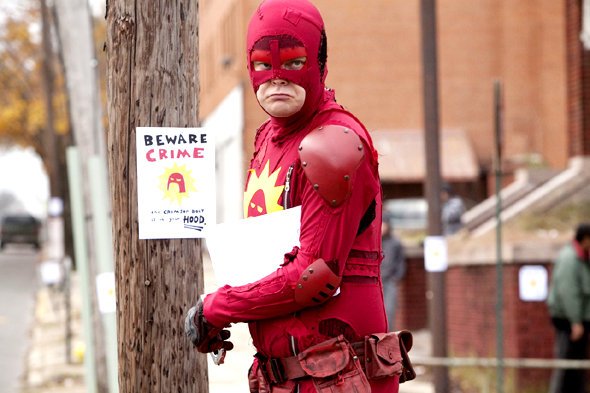
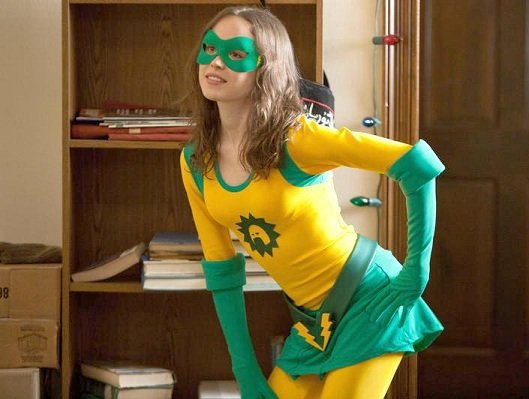
 erhero identity. Pretty soon, he's prowling the streets as the Crimson Bolt, clad in a red spandex suit and sporting a large wrench for a weapon. He causes as much chaos as he does good, especially when Libby joins his pursuit as sidekick Bolty. Frank decides to save his wife with Libby's help - and the results don't play out like any of the comic books that have inspired our would-be heroes.The problem with Super is not the premise, it's how writer/director James Gunn
  handles it. The script is constantly shifting tones in a way that makes it hard to understand how you're supposed to respond to what is going on.Gunn treats his main character in a similar way: sometimes Frank is a bumbling goof out of an Adam Sandler production, other times he behaves like Travis Bickle. It's tough to get invested in a storyline when you're being asked to sympathize with a character one moment, laugh at him the next moment and be horrified by his actions the moment after that. Other characters fare wo
 rse: Sarah is more of a plot device than a character, Libby is a one-dimensional wackjob and Jacques and the other villains are portrayed in a caricatured style that makes them play like stock figures from the films Super is attempting to satirize.The story also frequently stumbles over opportunities to push its satirical or dramatic aims. The audience is frequently presented with scenes that shock, like Frank blood
 ily beating down a man who cuts in line at a movie or a beat where Libby seduces a half-asleep Frank, but the film never follows through on the consequences of these moments. Instead, it cops out by rushing off to the next plot point or gag. The consequences of "heroism" don't really come into focus until the finale - and the last few minutes of the film bungle this once again by presenting us with a coda that is supposed to be tragic, funny and weirdly uplifting all at once.To make matters worse, Gunn's direction is as unfocused as his script: depending on the scene, his style veers from slapstick to surrealism to sensitive indie-drama. Any of those
  choices would have been acceptable for the film - or even an approach where these styles are matched to different acts within the film - but constantly switching back and forth between these different styles is as annoying as it is stylistically incoherent.The best element of Super is its cast. Unfortunately, the erratic and often weak characterizations wastes their efforts. Wilson tries hard and shows previously unseen dramatic depth in some scenes but his character's lack of growth works against his efforts. Tyler is game but her character remains a mystery - it's noteworthy that Frank tells us more
  about her via narration than we actually get to witness firsthand. Bacon is in ham-it-up mode, which at least gives his scenes a certain energy. Page gives a shrill performance full of forced outrageousness that quickly grates on the nerves. Elsewhere, Gregg Henry and Linda Cardellini are wasted in throwaway roles.Simply put, Super is a mess that spends a good 95% of its running time fumbling the ball. The most frustrating aspect of the film is that the occasional scene rises up out of its mismanaged jumble to connect with the viewer: examples include a stunning moment where Frank offers a teary-eyed prayer to God for guidance as he decries his pitiful life or a sensitive, understated flashback that depicts the beginning of Sarah and Frank's relationship. If Gunn had been more careful and focused in his storytelling, he could have made a film filled with such moments. Instead, Super substitutes self-satisfied irreverence for good storytelling - and the audience pays the price for its unearned self-indulgence.