

KILLING MACHINE: Sonny Chiba's Philosophy Of Kicking Ass

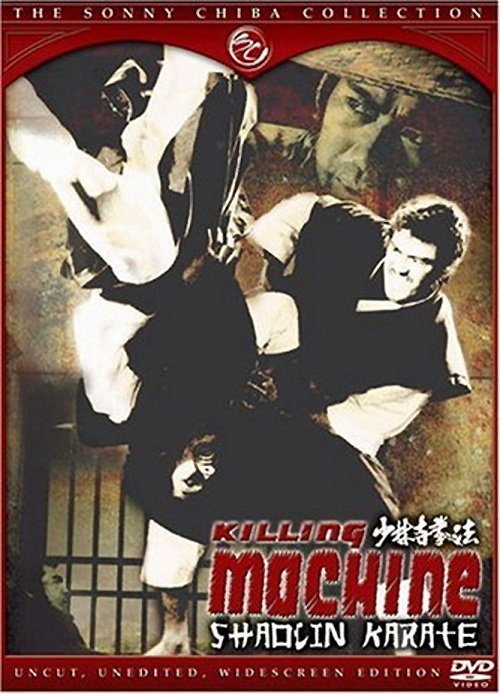
Your average fan of vintage martial arts fare might consider Bruce Lee or Jackie Chan to be the king of that cinematic style. Schlock fiends make a different choice: the immortal Sonny Chiba. This Japanese star has been an icon to exploitation-flick fans everywhere for decades thanks to his legendary and outrageous series of Street Fighter films. Even Quentin Tarantino even tipped his hat to the legend of Chiba by having his heroes meet at a Street Fighter screening in True Romance and later casting Chiba as swordmaker Hattori Hanzo in Kill Bill.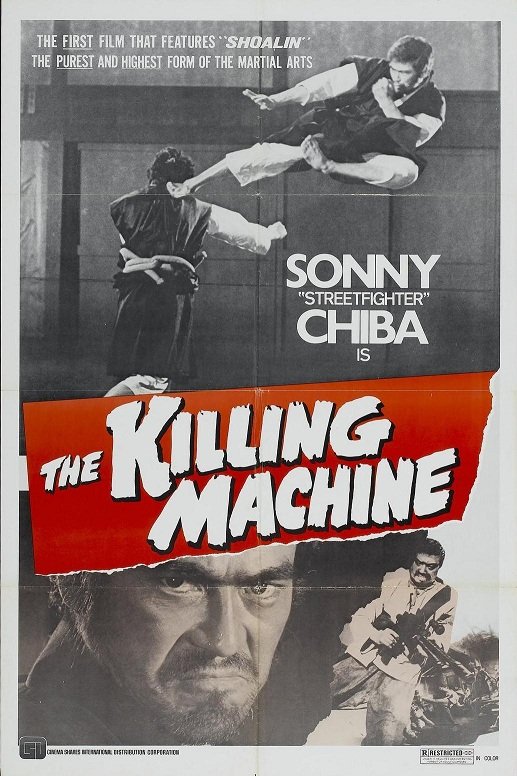 The Street Fighter films alone are enough to earn him a place of honor in any exploitation film pantheon but those three films are just a drop in Chiba-san's cinematic bucket - he was prolific throughout his 70's-to-early 80's heyday and produced countless blood-drenched epics. One of the finest is Killing Machine, a stunner that blends Chiba's bone-crunching take on martial arts action with a subject near and dear to his heart.Killing Machine is a biography of Doshin So, a legendary soldier-turned-teacher who formed a school to teach his own Shaolin-derived brand of martial arts (Shorinji Kenpo, which was also the film's Japanese title). So was Chiba's sensei so this film no doubt had a special meaning for him. That said, viewers shouldn't expect a somber, rigorously faithful rendering of the man's life because a pre-film disclaimer tells us that despite the real life inspiration, the tale and characters have been fictionalized. In other words, this film treats viewers to the rough-and-ready Chiba version of this story.
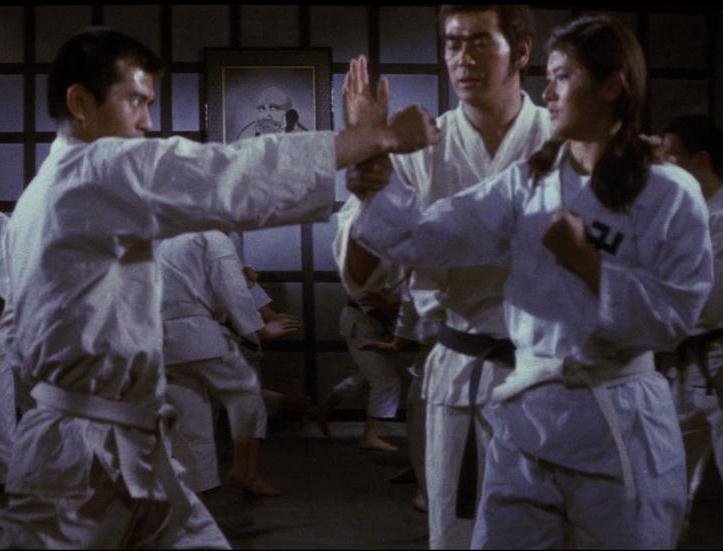
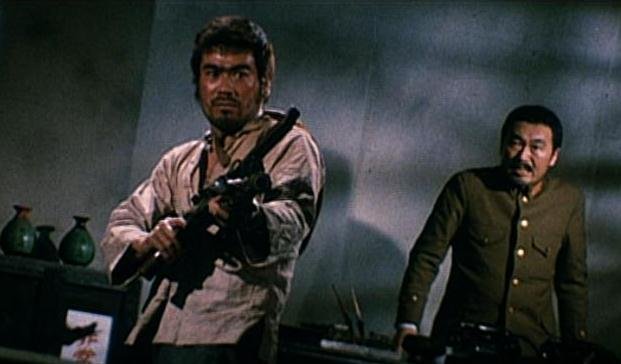 The film begins with Chiba single-handedly taking out a band of Chinese soldiers during a World War II skirmish, only to discover Japan has surrendered to the allies. He returns home and finds a broken land where Koreans prey on the Japanese, the Americans run things in a ill-tempered manner and Japanese people of lesser moral fiber get rich via black market means. After fighting these enemies one too many times, So is banished to another town. He forms a school to teach his personalized blend of martial arts but trouble follows as his black market
 enemies grow in power. They see him as a threat (which is wise) and start picking off his buddies (which is the opposite of wise). Thus, the stage is inevitably set for a paint-the-dojo-red finale.The end result is a gritty action flick with an unexpected emotional edge. Killing Machine is manipulative in the extreme - Doshin's true love ends up becoming a prostitute due to her circumstances and virtually anyone else who sides with Doshin is guaranteed a grim fate. It also shamelessly feeds off the racial tensions and morale problems stemming from Japan's defeat in World War II - the story is almost entirely composed of scenes of foreign roughnecks (or sell-out locals) roughing up innocent folk, prompting Chiba to step in and beat them down in total wish-fulfill
 ment style. The latter aspect is important, ensuring a steady flow of brutality that includes beatings, stabbings, shootings, extremity-hacking and even one castration. In other words, this is not a film for those weaned on the comedy kung-fu stylings of Jackie Chan.That said, Killing Machine is a finely-tuned juggernaut of a movie that fulfills its brute-force agenda in an effective and surprisingly artful style. Director Norifumi Suzuki, a seasoned director of Japanese exploitation fare, wisely figured out the only way to handle this sensationalistic tale was to go over the top... and he does so, with great gusto and total fearlessness. He gives the film a gorgeous cinemascope gloss but keeps the action visceral, immediate and free-flo
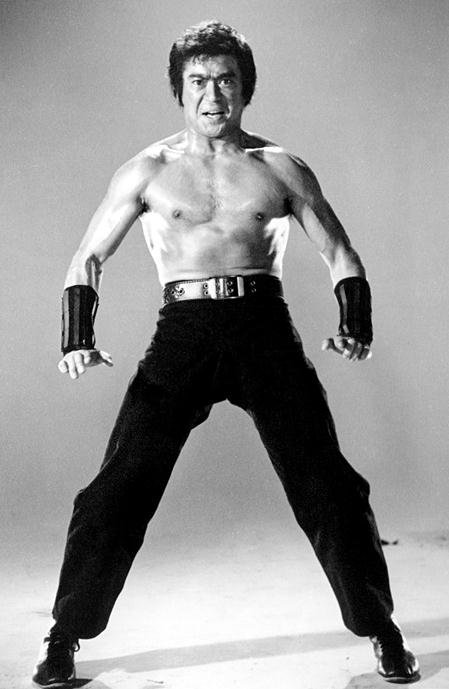 wing - there's a fight or some brutal incident virtually every five minutes in this film. Even simple drama scenes go for the throat - you've never seen this many people burst into tears in a martial arts film. The end result feels like a head-on collision between Kinji Fukasaku and Douglas Sirk.Finally - and most importantly - there is Sonny Chiba himself. Whether he is punching his way through a half-dozen black marketeers or tearfully wishing goodbye to a pack of hero-worshipping orphans, he carries himself with feral grace and self-righteous intensity. He commands attention and respect no matter how out-there the situations get and that is the sign of a true screen hero. The combination of his white-hot screen presence and Killing Machine's crazed but potent storyline adds up to pure pulp poetry.