

GAMERA VS. ZIGRA: This Is Your Kaiju-Eiga On Dope

In the 1970's, Japanese giant-monster films were synonymous with "kiddie fare" in the eyes of many moviegoers around the world. The companies who produced these films all ended up playing into this perception at one time or another but few pursued it as aggressively as Daiei did with their Gamera franchise. After the first two entries, the producers of this series hit upon a formula where kids were at the center of the action and Gamera was basically a fire-spewing teddy bear who lived to protect the kids from evil monsters.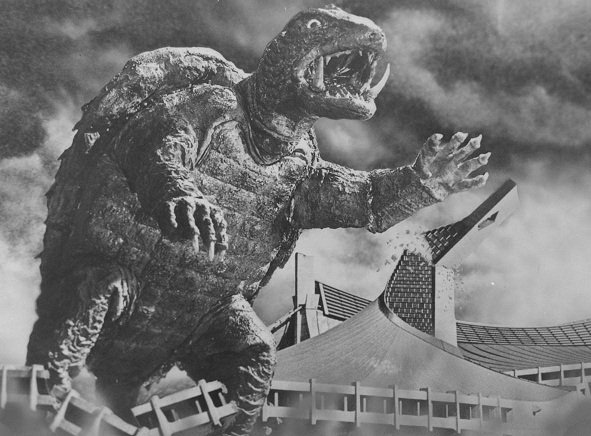 Gamera Vs. Zigra was the last of the "classic" Gamera films (Gamera: Super Monster wouldn't appear until 1980 and would rely heavily on footage from past Gamera films). The plot follows a familiar progression: Kenichi (Yasuchi Sakagami) and Helen (Arlene Zoellner) are two little kids who live near the local Sea World because their dads work at an adjacent marine facility. They run into trouble when a spaceship snatches up their boat and its pilot, one Lady X (Eiko Yanami), reveals that Earth is to be colonized. The only hope for our kiddie heroes and the whole of humanity lies in Gamera, the children's champion.The end result is not highly regarded amongst kaiju-eiga buffs for a few reasons. By this point, the budgets for this series had been cut heavily and the effects had become cheaper. As a result, the film's central monster does little carnage and is limited to two showcase battles with Gamera that are radically scaled down from the past glories of t
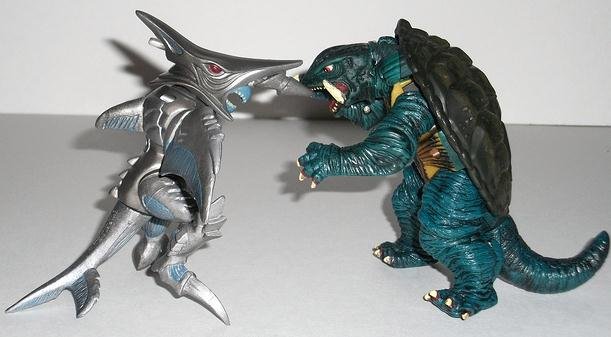 he early entries. Also, the intensely kid-friendly focus ensured that serious genre fans would have a hard time getting into it.That said, the latter entries in the Gamera series are all about goofball, children's matinee-style fun and Gamera Vs. Zigra delivers plenty of that. In fact, director Noriaki Yuasa brings a whimsical-in-an-odd-way touch to the proceedings here. An early sequence features our kid heroes preparing for school as their mothers compare them to the Sea World dolphins, which is intercut with the dolphins performing tricks. The juxtaposition is eccentric and humorous all at once. Combine that with a tone that switches from nursery-school slapstick humor to tearjerker melodrama in whiplash style and you have an endearingly wonky experience.And that's not all the fun here: Eiko Yanami has a good time with her evil space lady role and looks quite fetching in her interstellar catsuit (the writers also figure out a clever excuse to get her in a bikini for a few scenes). Finally, the end battle of the film closes with Gamera performing a bizarre flourish that suggests Yuaka or screenwriter Nisan Takahas
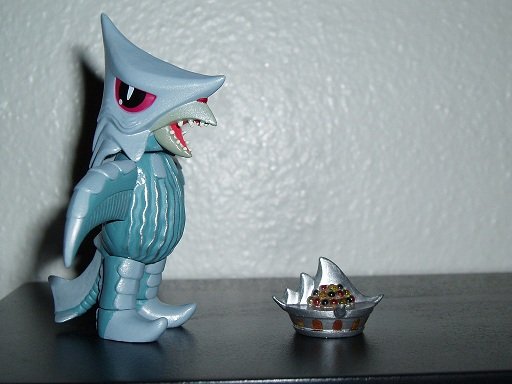 hi went temporarily insane when they conceived it. Your Humble Reviewer won't spoil the surprise for those who haven't seen it - but the crew was probably falling about and laughing hysterically when they shot Gamera's closing moves in this fight.In short, Gamera Vs. Zigra is the ludicrous kiddie fare that it is accused of being. It also fascinatingly eccentric and made by people who were clearly having fun with the material. Some viewers might have problems with its oft-saccharine "for the children" storyline but there is some choice weirdness to be mined here if you can get into its LSD-spiked juvenile vibe.