

FIGHTING MAD: Redneck Revenge With An Indie Touch

Jonathan Demme was one of the most idiosyncratic talents to emerge from Roger Corman's New World Pictures during its 1970's heyday. Like most filmmakers, he worked to fulfill Roger Corman's interpretation of what the b-movie audience wanted, tackling specific subgenres at the producer's behest. However, Demme's work remained uniquely his own because he was able to add both style and a humanist point of view that brough richness to what might have otherwise been drive-in fodder.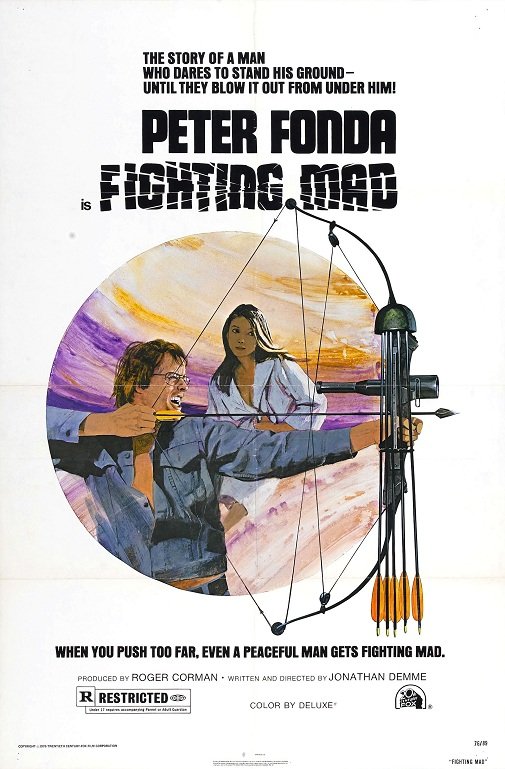 That style can be fully felt in Fighting Mad, Demme's third and final film as a director for Corman. He wrote and directed the film to fulfill Corman's request for a "redneck revenge" picture that could appeal to the same audiences who went for Billy Jack and Walking Tall. The scenario is built around a classic lone-crusader figure, Tom Hunter (Peter Fonda). Tom returns to home to work with his father Jeff (John Doucette) and brother Charlie (a young Scott Glenn) on the family farm.Unfortunately, a strip-mining operation run by the unscrupulous Pierce Crabtree (Philip Carey) is buying up all the surrounding land for a development project. Tom and his family are determined to stand their
 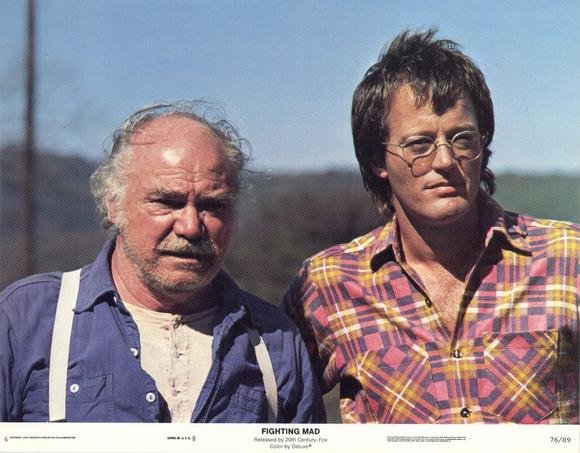 ground but Crabtree resorts to violent means to get his way - and when his family is affected, Tom decides to push back. It's inevitable that there will be a lot of blood on the ground before the inevitable mano-a-mano showdown.The end result hits the expected plot beats and delivers the drive-in staples - some action, some chases, a little skin - but the way in which these elements are delivered in Fighting Mad shows the style that Demme would bring to his later, more prestigious films. The keyword to define the director's approach here is "naturalism": he shot the the film on real locations, used local color
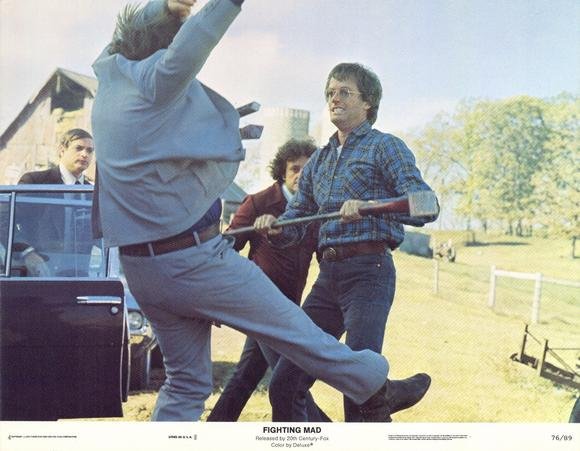
 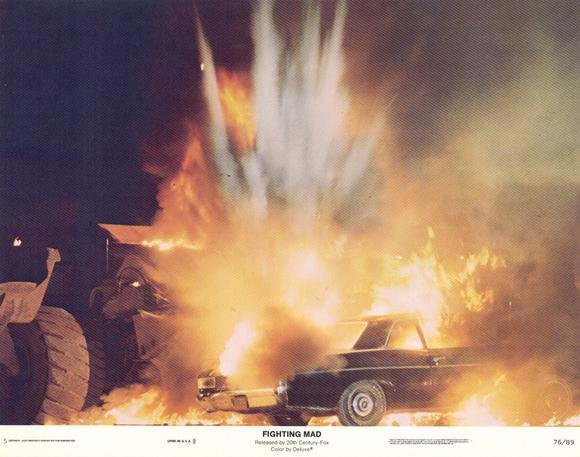 wherever possible in the cast and used an almost documentary look that shies away from the kind of comic-book visual excesses you might expect from a b-movie. Even the action scenes are designed to have a believable rough-and-tumble quality.Demme's naturalistic approach is effectively supported by a cast that underplays instead of giving into the kind of broad characterizations one often sees in rural-themed exploitation flicks. Fonda natural tendency for low-key acting makes his variation on the lone crusader a likeably quiet and enigmatic one (and thus more interesting when he snaps). Carey makes for a smooth villain and
  there's nice support from Lynn Lowry, who is likeably down to earth as Tom's concerned girlfriend. Doucette also deserves notice for making his patriarch character emotional without going over the top.The director also gets strong work from his crew. For instance, Michael Watkins' cinematography is gorgeous, making great use of the Arkansas locations and effectively deploying a shadowy, naturally-lit look in the interior sequences that is oft reminiscent of similar scenes in Rolling Thunder. There's also a unique musical score by Bruce Langhorne, who mixes the expected
 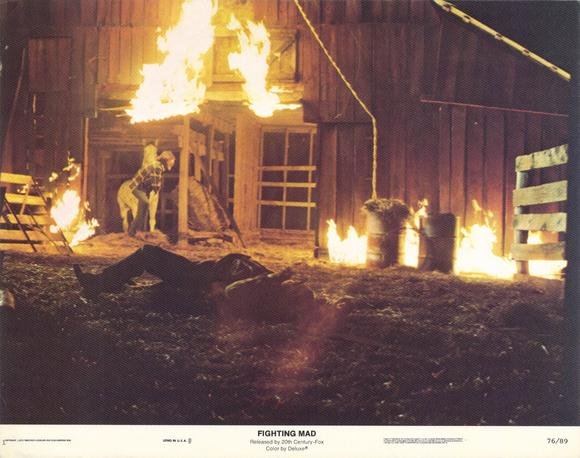 Americana and country music elements with eerie, "whistling" analog synth sounds that give the score its own distinctive flavor.In short, Fighting Mad shows that Jonathan Demme had already developed a skill at this early stage of his career for undercutting genre clichés with an attention to detail and an ability to add naturalistic touches that flesh out the more archetypal elements. These skills make the film a very strong programmer and well worth a look for anyone interested in the better Corman productions of the 1970's.