

THE EXTERMINATOR: The Grindhouse Answer To TAXI DRIVER?

Grindhouse cinema is traditionally thought of as "brand x" filmmaking, the kind of stuff that gets cranked out for the express purpose of appealing to the seedier interests of the viewing public. To a certain extent, this is true: turning a profit is crucial at the low-budget level and filmmakers in this style are willing to go to extremes to get the job done.
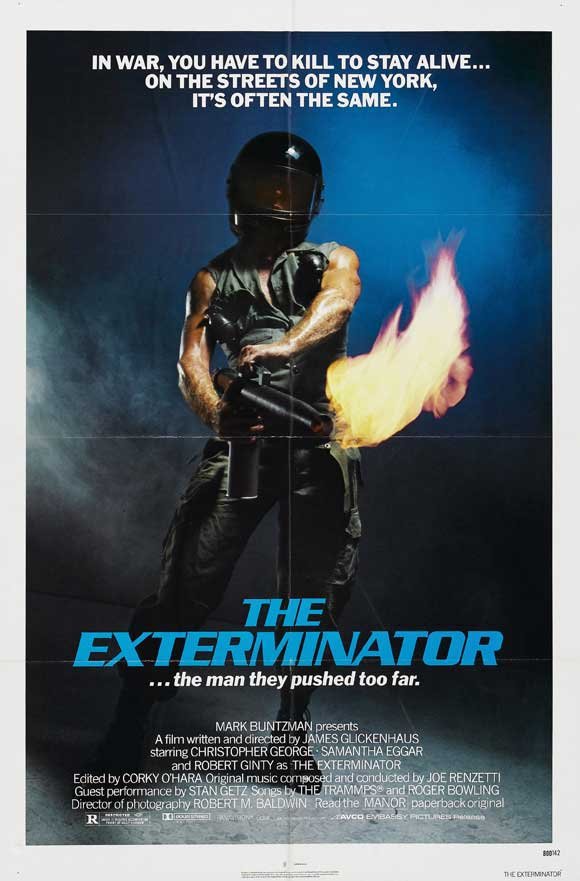
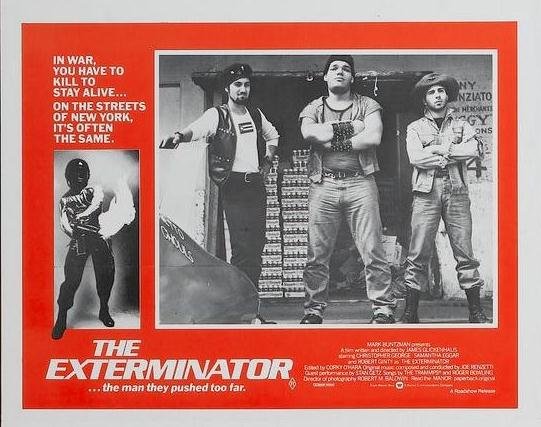
However, grindhouse filmmaking can be just as personal and invested with a distinct world view as the films of a mainstream filmmaker. A very unique example of this aspect of grindhouse filmmaking is The Exterminator, the debut film of James Glickenhaus. On the surface, it's a revenge movie with distinct echoes of Death Wish. However, there's a lot more going on under the surface than the film often gets credit for - and if viewed from the right perspective, interesting similarities to Taxi Driver come into view.
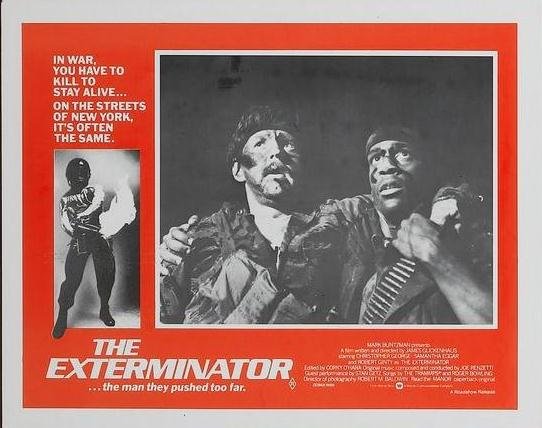
But first, a plot summary: a Vietnam War-set prologue establishes the friendship between John Eastland (Robert Ginty) and Michael Jefferson (Steve James) when Michael saves John from getting killed by enemy soldiers. Years later, they work together in NYC's meat-packing district. Michael has moved on to have a family but John seems to be aimless. However, things change when Michael once again saves John from a gang of punks trying to rob their workplace - and said punks retaliate by beating Michael so badly he ends up paralyzed and semi-comatose. John takes to the street, using his old army gear to track down and kill the men responsible.
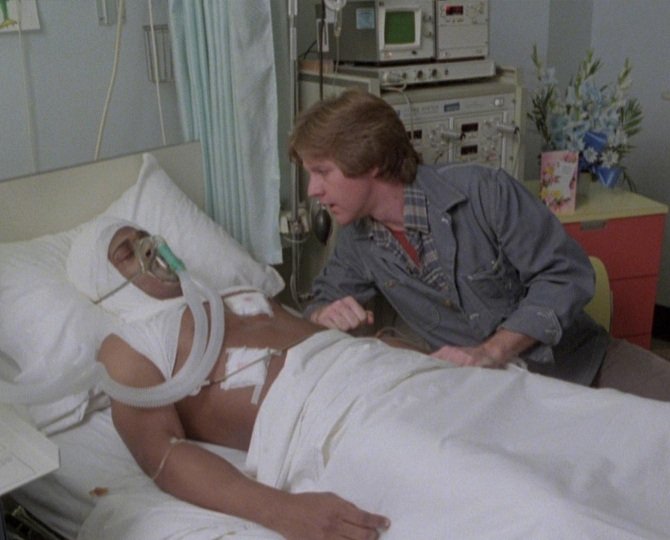
In most grindhouse flicks, the above synopsis would be the entire plot... but this only represents the first half-hour of The Exterminator.After taking down the gang, John turns his attention to others who make life difficult for the people of New York City. His targets include everyone from a mobster who shakes down his boss for protection money to a chicken-hawk pimp who procures young boys for his sleazy clientele. Meanwhile, Detective James Dalton (Christopher George), a cop who is like John is certain key ways, is trying to track him down - and so are some shadowy government operatives who fear that John's vengeance campaign will create a hostile atmosphere for their administration.
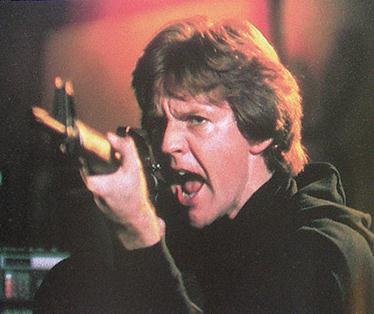
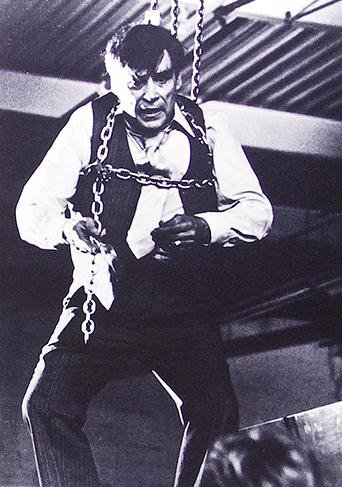
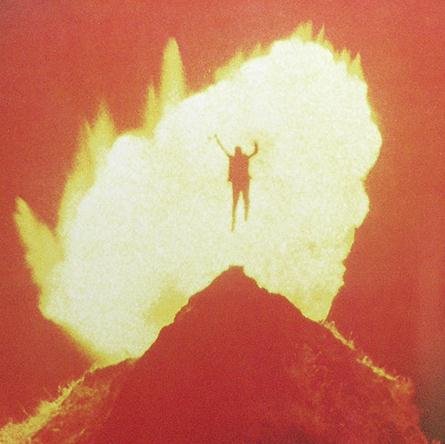
The end result has earned its reputation as one of the genre's grim classics. The Exterminator is punctuated by a barrage of shocks, with the violence often having a Grand Guignol edge to it. Grisly highlights include one of the most convincing beheadings in film history, courtesy of effects whiz Stan Winston, and a scene that involves a mafioso being suspended over an industrial-size meat grinder. The Vietnam War prologue shows Glickenhaus' flair for explosive action, a talent that would serve him well in later flicks like The Soldier and Shakedown.
The Exterminator isn't bashful about its sleaze content, either. Glickenhaus portrays Times Square and the Bronx in all their seedy glory, taking the audience inside bondage dens, tenement gang hideouts and "hot sheet" motels as his hero descends into a sordid urban underworld. The sequences involving the chickenhawk pimp are particularly skin-crawling, with a level of squalid detail right out of a tabloid newspaper story.
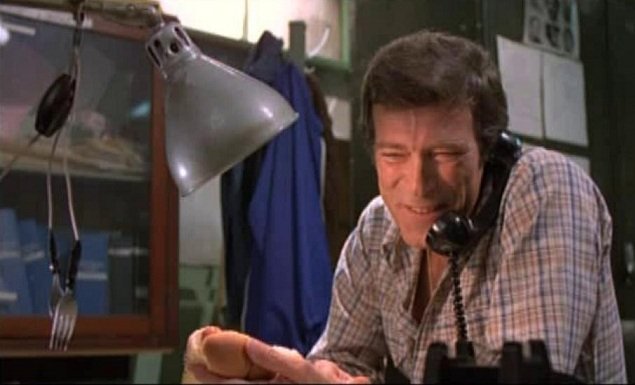
Elsewhere, the sleaze is offset with oddball urban guerrilla touches, like a sequence where John makes his own mercury-tipped bullets and a fun throwaway bit where Dalton has an electrified prong contraption rigged to his lamp to cook hotdogs. The story is also laced with eccentric bits of humor, like a mobster complaining about the state of modern comic strips and the unique insult Dalton uses to tell off a government spook.
That said, even grindhouse fans should be warned that the film has some odd touches that might throw them off: for instance, there are oddly abrupt transitions throughout the film, the most notable being an audacious jump-cut that takes the story from John giving Michael's wife the bad news about her husband's condition to John interrogating a gang member (who we've never seen before) to get info on the gang. They're jarring at first but soon become part of the narrative design - and they add to the weirdly dreamlike, random quality of John's search for vengeance.
There's also a romantic subplot for Dalton with a doctor (Samantha Eggar) that seems shoehorned in to provide a romantic interest element that we don't get in John's storyline. That said, it serves as a way to compare/contrast Dalton and John. Dalton has a warmth and ability to reach out to others that John lacks - yet both were soldiers and Dalton finds himself oddly respecting his sense of duty. It's also worth noting that this subplot gives the audience a breather between shocks.
These unorthodox touches are just a small part of what makes this film such a one-of-a-kind experience. A big part of what makes The Exterminator so distinctive is the detached, almost clinical approach Glickenhaus takes to his material. It has the manipulative hooks of a revenge movie but we never get the sense that there is a chance for the hero to achieve justice or even redemption. A key moment involves John confessing to his paralyzed friend that he didn't agonize over killing his attackers, he just did it. As the opening credits song eerily intones over soft country music: "I had to heal it/'Til I couldn't feel it..."
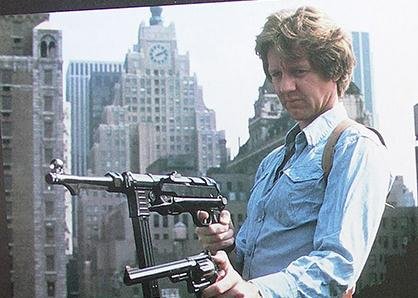
As a result, The Exterminator starts to feel like a down-and-dirty, grindhouse take on Taxi Driver as it progresses, with John serving as our Travis Bickle. If that sounds strange, consider this list of elements the two films share: an alienated war-vet hero being driven over the edge by NYC squalor, darkly comic vignettes of street people bantering with (and taking advantage of) each other, a scene where the hero invades a pimp's den to avenge a prostitute and a seemingly suicidal finale followed by bitterly ironic "happy" ending. The Exterminator isn't a mirror image of Taxi Driver, nor does it try to be, but it's easy to get the sense that Glickenhaus is drawing from the same well of urban alienation that inspired Paul Schrader and Martin Scorcese.
It's also worth noting that Glickenhaus gets some surprisingly strong, Method-style performances from a mix of veterans and up-and-comers here. Prior to this film, Ginty was known better for work like The Paper Chase television series than gritty exploitation material - and the fact that he's not a conventional action hero fits the story's purposes nicely. With his hangdog expression and quiet Method actor intensity, he makes a distinctive anti-hero.
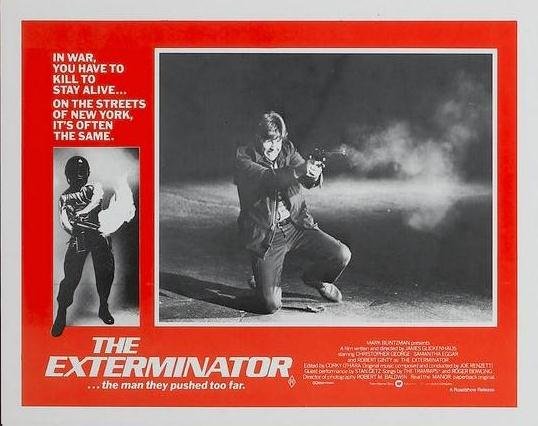
George offers light to his shade as the cop hero: he was at the beginning of the final grindhouse-friendly stretch of his career and he applies an old pro's charm to his work here. Eggar doesn't get much to do but she adds a touch of class. The various crooks and street people are played broadly but that serves the "urban nightmare" angle of the plot well: Dick Boccelli is particularly entertaining as a loquacious mobster and the gang is loaded with up-and-coming character actors like Dennis Boutsikaris and Ned Eisenberg.
In summation, The Exterminator perfectly fits the grindhouse genre in content yet it stands apart from the pack because it has a voice and an unusual set of rhythms all its own. If Your Humble Reviewer had to make a list of the top five must-sees from this style of filmmaking, this film would definitely be on there.