

CAPONE: Camp Theatrics For The Tommy Gun Set

Mob movie fever swept Hollywood in the wake of The Godfather and its equally successful sequel: The Don Is Dead, The Valachi Papers, Crazy Joe and Lepke were amongst the many films cranked out to capitalize on the public's thirst for gangster fare. Roger Corman had a history with the mobster genre - The St. Valentine's Day Massacre is one of his best films - and he reunited with that film's producer, 20th Century Fox, when they wanted to make their own period-set gangster quickie about the life of one Alphonse Capone.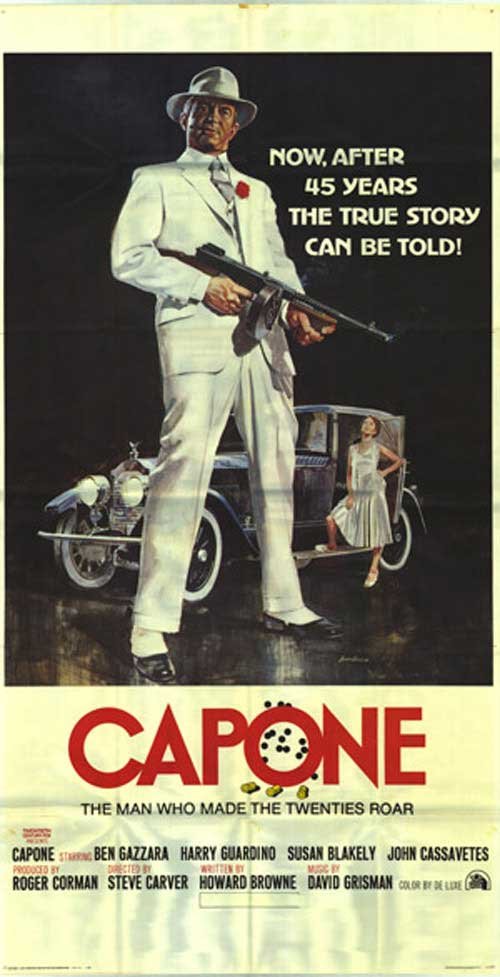 The result was Capone - and while it probably didn't cause Mario Puzo or Francis Ford Coppola to lose any sleep, it offers its own amusingly daft b-movie variant on the expected guns, sin & bathtub gin. Howard Browne, author of the script for The St. Valentine's Day Massacre, returned to write the screenplay here and what he turned out was like a b-movie Cliff Note's version of the Al Capone story, albeit one that plays fast and loose with the facts.The story starts with Capone (Ben Gazzara) as a young tough who bluffs his way into the employ of Johnny Torrio (Harry Guardino). He quickly makes his way up to right-hand man status for the older gangster but finds himself f
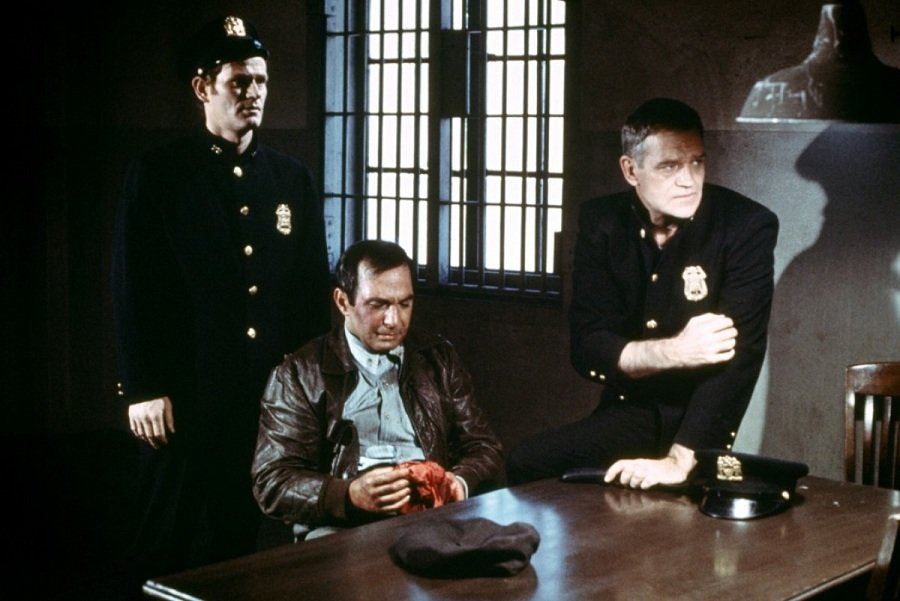 rustrated when Torrio kowtows to ruthless rivals like Dion O'Bannion (John Orchard) and Hymie Weiss (John Davis Chandler). Capone makes a few power-plays that lead him to the top of his profession, complete with his own right-hand man, Frank Nitti (Sylvester Stallone), and a flapper-girl lover in Iris Crawford (Susan Blakely). However, the gangster business isn't a stable one and it's inevitable that Gangster Numero Uno won't enjoy a happy ending.No one can fault Capone for lacking ambition - in the space of 100 minutes, it covers over 20 years' worth of gangster history and involves dozens of speaking roles in the process. However, the end result isn't dramatically satisfying
 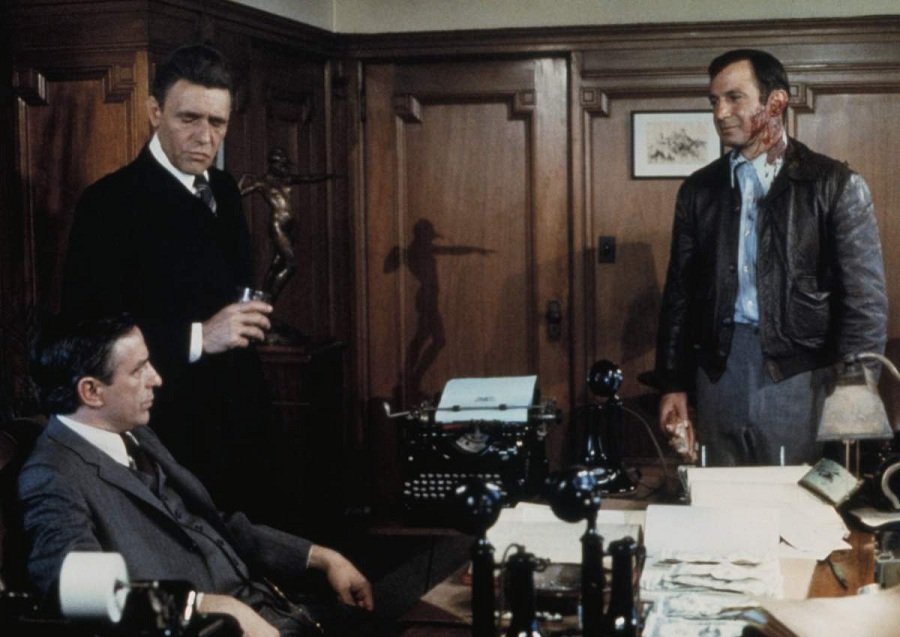 because it tries to do so much in such a tiny narrative space. The story has a disconnected, choppy quality as it rushes through decades of incidents and historical personalities at the expense of characterization and dramatic depth. It doesn't help that the film is sloppy in the historical accuracy department: the Iris Crawford character didn't exist in real life, the film ignores the existence of Capone's brother (a collaborator in his business) and has Frank Nitti involved in a fictional conspiracy long after the man was dead in real life.However, Capone
 's failings as a historical gangster drama make it delightfully amusing as a bullet-riddled camp spectacle. Director Steve Carver, fresh off making the beloved drive-in classic Big Bad Mama, keeps the story rolling at a furious pace and dots it with plenty of tommy-gun carnage and fisticuffs. His breakneck pacing might sit at odds with the stately, Godfather-style atmosphere the film is simultaneously trying to evoke but it also keeps the proceedings from getting dull. Carver wisely plays into the film's excesses - the story often feels like a series of scenes of guys in gangster suits shouting at each other between bouts of shooting at each other - and the finished film has a dramatically overripe quality that is compelling, even when the script falls short.Capone also has a fun cast: Guardino lends some unexpected gravitas to an underwritten role, Stallone shows early star charisma in an effectively underplayed turn as Nitti and Dick Miller has a fun cameo as an aggressive cop on the t
 ake. Elsewhere, the supporting cast is studded with familiar faces like Martin Kove and Royal Dano. John Cassavetes fans will want to take note of his one-scene role as Frankie Yale (it's fun to see him and Gazzara taking a break from Cassavetes' serious indie dramas to play gangster together). It's also worth noting that Blakely is very sexy as the film's obligatory eye-candy - and she's not shy about the nudity, including a moment that was a full-frontal nude first in Hollywood history.That said, the movie belongs to Gazzara's intense, borderline-unhinged performance in the title role. The expression "scenery-chewing" fails to capture what Gazzara pulls off here: he bugs his eyes out, crazy man-style, in his first dialogue scene and takes every opportunity to go over the top as he barks out threats at top volume and smacks around various supporting players. It's like watching a cartoon of a parody of an opera villain's perfor
 mance... and his final scene in the film is a camp-classic moment for the ages, a monologue that is the gangster movie version of Patty Duke's final soliloquy in Valley Of The Dolls.In short, Capone might be the cut-rate version of a Godfather-style saga but it has a trashy charm all its own. Gazzara's performance alone makes it worth seeing: if you thought he went nuts in Road House, you ain't seen nothing yet.