

ATTACK OF THE CRAB MONSTERS: Imagination Vs. Resources On The Island Of Low Budget Quickies

Now there's a title that a schlock fan can get behind. It promises excitement, monsters and the kind of deadpan surrealism that one can only get from a vintage cheapie made before the advent of ironic humor in genre fare. However, a veteran genre fan knows that it is virtually guaranteed that a low-budget quickie from the 1950's won't be able to deliver the kind of spectacle and carnage that the title suggests.The best one can hope for is that the film will deliver enough straight-faced absurdity to deliver on the "deadpan surrealism" front. If you get a few interesting ideas or some traces of personality along the way, it's a nice bonus. Thankfully, 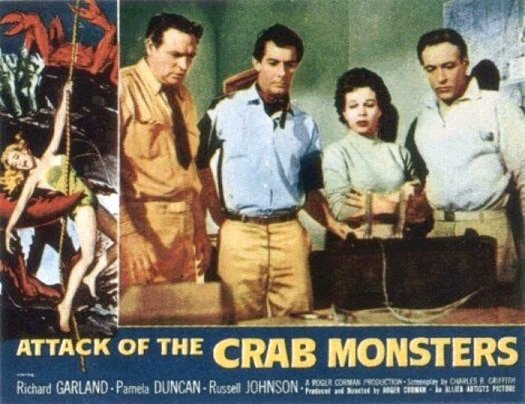 Attack Of The Crab Monsters is able to deliver the aforementioned modest pleasures. This early example of the creative partnership between director Roger Corman and screenwriter Charles B. Griffith shows the two doing their best to be inventive when working in poverty-row circumstances.The plot begins with a ship of science types visiting an atoll to find out what happened to a prior expedition team that has gone missing. The group includes scientist/sweetheart duo Dale (Richard Garland) and Martha (Pamela Duncan), the adventurous-minded Dr. Weigand (Leslie Bradley), botanist Jules (Mel Welles) and technician Hank (Russell Johnson). They're in trouble from the moment they land: a sailor gets decapitated by something unseen beneath the waves and the plane that dropped them off explodes before it can sail off the waters.That night, th
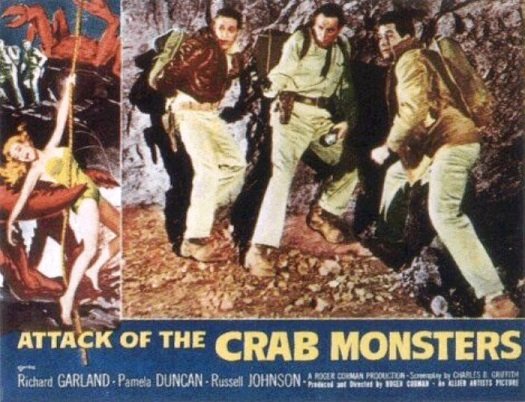 ey hear clicking noises in the dark and the voices of their missing cohorts calling after them. When they begin to explore the island, they discover that it is rapidly crumbling and shifting under them. The reason for all these mysterious occurrences is revealed to be giant-sized crabs that were mutated by the atomic testing in the area. Not only do they have tremendous destructive abilities, they are super-intelligent, telepathic and have the ability to assume the personas of the people they devour by projecting out thoughts using their "voices".If you want to poke fun at Attack Of The Crab Monsters it's pretty easy. The haste with which it was made leads to inconsistencies between what we hear and what we see: for instance, Dale is attacked in brightly lit room by a giant cr
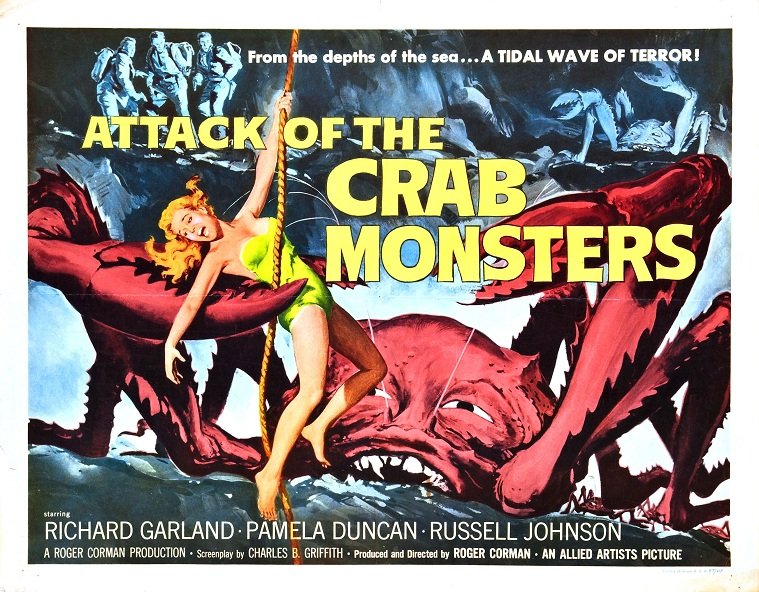 ab claw and then tells Martha it was too dark to see what attacked him when he escapes. Moments like this pile up as the film barrels through its 62 minute running time and the straight-faced approach used by both Corman and his actors gives it a campy feel (this was right before Corman and Griffith learned that it helped to add a bit of hip, self-knowing humor to offset the rough edges of their endeavors).That said, Attack Of The Crab Monsters is a compelling view for fans of vintage genre fare despite its ragged edges. For starters, it is fiercely imaginative and tries to offset its limited budget with a constant stream of offbeat ideas. Griffith adds in all manne
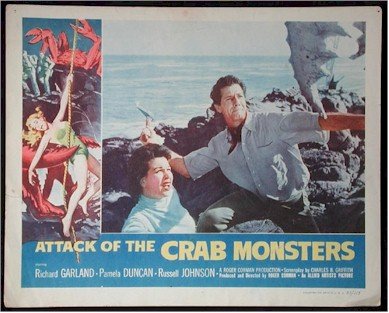 r of interesting wrinkles to keep the viewers intrigued: examples include the constantly shifting topography of the island, the method the monsters use to "throw" their voices to communicate with the humans and the fun pseudo-science that explains why the monsters are impervious to conventional weapons.The film also benefits from Corman's brisk direction. He summons up a decent atmosphere - Floyd Crosby's stylish black-and-white cinematography plays a big role in creating this atmosphere - and manages some genuinely creepy setpieces, the best being the moments where the "voices" of the fallen comrades call out to the explorers in the dead of night. He gets solid performances from his cast, with Johnson (best known to most viewers as the
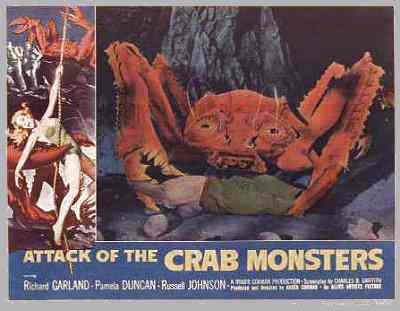 Professor from Gilligan's Island) offering an impressive turn as the low-key, resourceful tech who is as brave as his cohorts are brilliant.In short, Attack Of The Crab Monsters might be a humble entry in Roger Corman's filmography but it offers plenty of imagination alongside the expected cheapness. He was still working out the kinks in his low-budget formula but this film shows the ability to be ambitious within limited means that would soon make him a success.